

Blog
Lithium-Ion vs Lead-Acid Forklift Batteries: The Complete Comparison for 2025

Introduction
When choosing an electric forklift, one of the most critical decisions you’ll face is selecting the right battery technology. For decades, lead-acid batteries were the industry standard, but lithium-ion (LiFePO4) forklift batteries have rapidly gained market share due to their superior performance and lower total cost of ownership.
In this comprehensive guide, we compare lithium-ion vs lead-acid forklift batteries across every important metric — helping Chinese and international buyers make an informed investment decision.
Quick Comparison Table
| Feature | Lithium-Ion (LiFePO4) | Lead-Acid |
|---|---|---|
| Lifespan | 3,000–5,000 cycles | 1,000–1,500 cycles |
| Charging Time | 1–2 hours (fast charge) | 8–10 hours + cooling |
| Maintenance | Zero maintenance | Water refilling required |
| Weight | Lighter (30-50% lighter) | Heavy (acts as counterweight) |
| Energy Efficiency | 95%+ efficiency | 70–80% efficiency |
| Upfront Cost | Higher ($1,500–$3,000 more) | Familiar budget option |
| 5-Year TCO | 30–40% lower | Higher due to replacement + labor |
| Safety | Built-in BMS, no gas emission | Hydrogen gas, acid spill risk |
1. Cycle Life & Longevity
The single biggest advantage of lithium-ion forklift batteries is their cycle life. A quality LiFePO4 battery delivers 3,000 to 5,000 charge cycles, compared to just 1,000–1,500 for traditional lead-acid. In practical terms:
- Lithium: 8–10 years of service life under normal operation
- Lead-acid: 3–5 years before replacement is needed
This means over a decade, you’ll replace a lead-acid battery 2–3 times, while a lithium battery may serve you for the entire period.
2. Charging Speed & Opportunity Charging
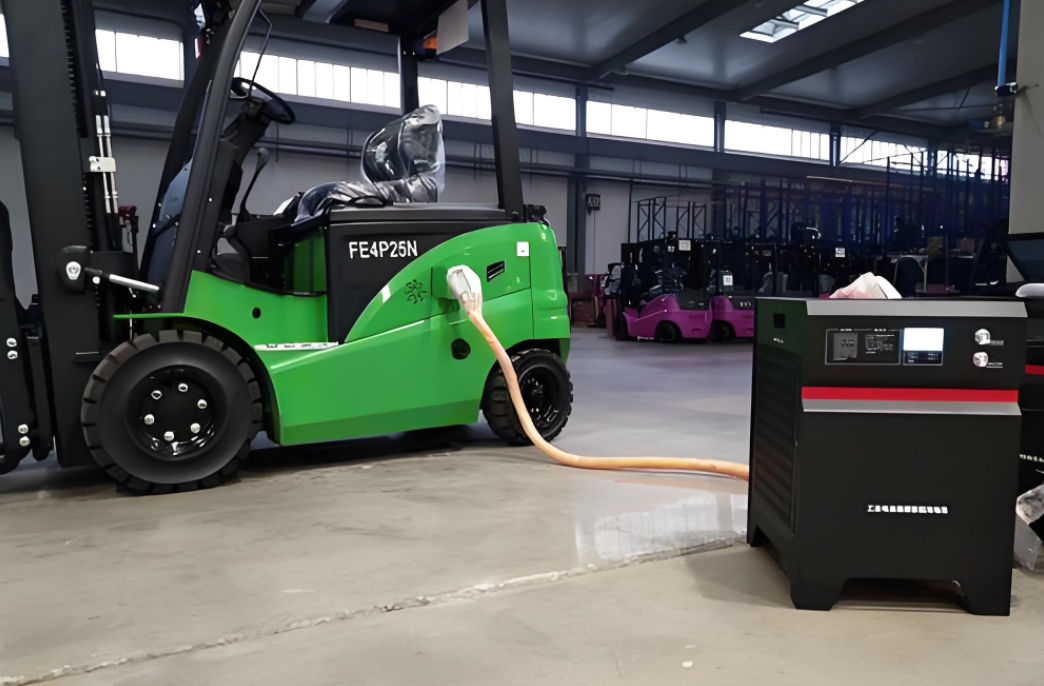
Lithium-ion batteries support opportunity charging — you can top up during lunch breaks or shift changes without damaging the battery. A full charge takes just 1–2 hours.
Lead-acid batteries, by contrast, require a full 8–10 hour charge cycle plus a mandatory cooling period (equal charge time), meaning they cannot be opportunity-charged without significantly reducing lifespan.
Result: Lithium-powered forklifts achieve higher uptime and can operate across multiple shifts with fewer battery change-outs.
3. Total Cost of Ownership (TCO) Analysis
While the upfront cost of a lithium forklift battery is higher (typically $1,500–$3,000 more per battery), the long-term savings are substantial:
| Cost Factor | Lithium-Ion | Lead-Acid |
|---|---|---|
| Initial purchase | $6,000–$8,000 | $3,500–$5,000 |
| Battery replacements (10 yrs) | 0 replacements | 2–3 replacements |
| Maintenance labor (10 yrs) | $0 | $1,500–$3,000 |
| Water refilling | $0 | $500–$1,000 |
| Energy cost (10 yrs) | $3,500 | $5,500 |
| Total 10-year cost | $9,500–$11,500 | $13,000–$18,000 |
On average, lithium saves 30–40% in total ownership costs over a decade — a compelling ROI for warehouse and logistics operators.
4. Maintenance & Daily Operations
Lithium-Ion (BaGong Forklift Standard)
- No water refilling needed
- No acid spills or terminal corrosion
- No equalization charges required
- Built-in Battery Management System (BMS) monitors temperature, voltage, and health
- Plug-and-charge simplicity
Lead-Acid
- Weekly water refilling (demineralized water)
- Monthly equalization charging
- Terminal cleaning and corrosion prevention
- Dedicated charging room ventilation required (hydrogen gas)
- Battery washing and neutralization of acid spills
For businesses with large fleets, the labor savings alone from switching to lithium can justify the investment.
5. Safety & Environmental Impact
Lithium (LiFePO4) is the safest lithium chemistry — it’s thermal runaway resistant, non-toxic, and produces zero emissions during operation. Lithium iron phosphate (LiFePO4) battery technology is widely recognized for its thermal stability and long cycle life. The built-in BMS provides overcharge, over-discharge, and short-circuit protection.
Lead-acid batteries contain sulfuric acid and lead — both hazardous materials requiring proper disposal. They also emit hydrogen gas during charging, necessitating ventilation.
From an environmental standpoint, lithium batteries are also more recyclable and have a smaller carbon footprint over their lifecycle.
6. Which Battery Is Right for Your Forklift?
Choose Lithium-Ion If:
- You run multi-shift operations (need opportunity charging)
- You want zero maintenance and lower labor costs
- You plan to keep the forklift for more than 5 years
- You have limited space for a charging room
- You value energy efficiency and sustainability
Stick with Lead-Acid If:
- You have a very tight upfront budget
- You only use the forklift for a single shift
- You already have a dedicated charging infrastructure
- You need the battery weight as counterbalance (some 3-wheel models)
- Your usage is very light (under 2 hours per day)
BaGong Forklift Battery Options
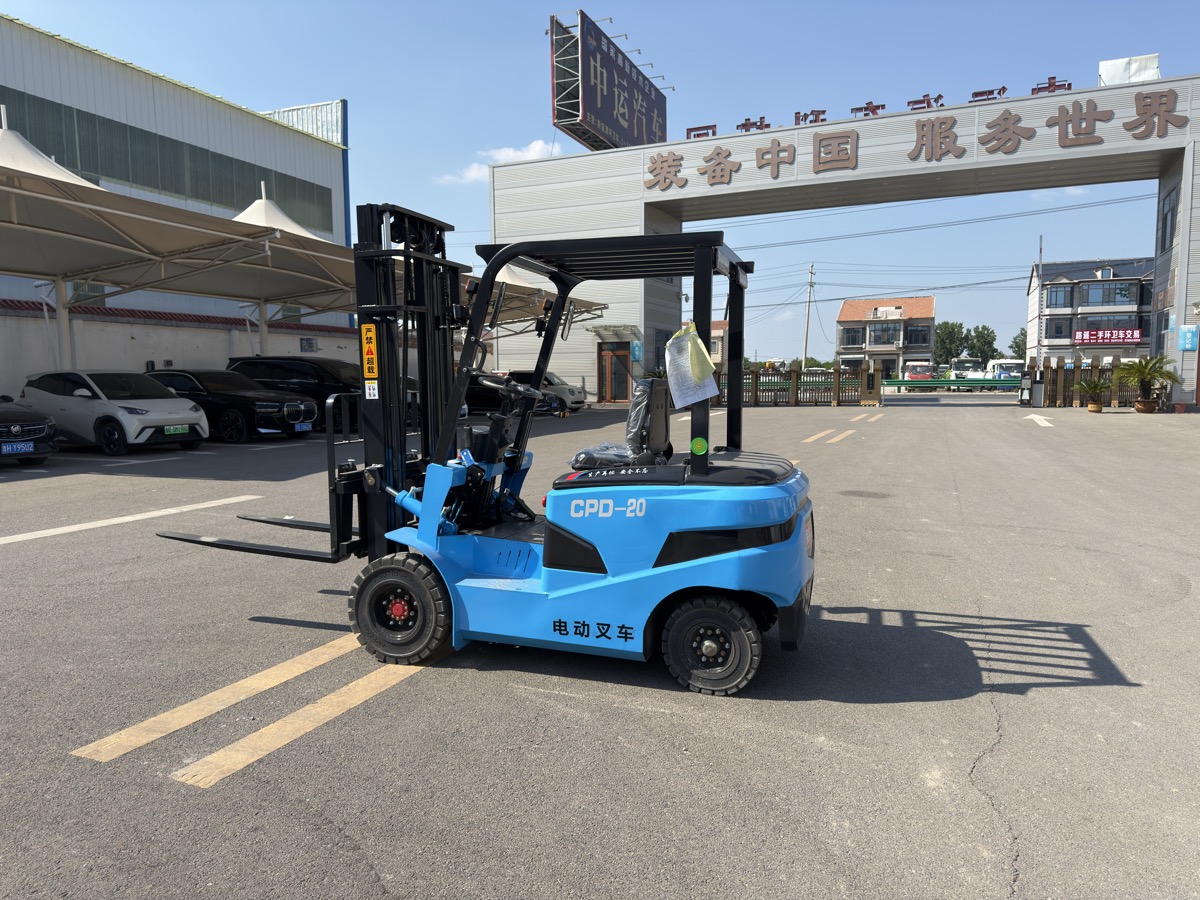
At BaGong Forklift, we offer both lead-acid and lithium-ion options across our entire electric forklift range (2-ton to 4-ton):
- Standard: Lead-acid battery (60V, Chaowei brand)
- Premium: Lithium LiFePO4 battery (options from Zhonghang Lithium, Zefeng, and Shengkang)
Our LiFePO4 batteries are paired with Hate permanent magnet synchronous AC motors and intelligent controllers for maximum efficiency.
👉 View our 2-ton electric forklift with lithium option
👉 View our 3-ton electric forklift with lithium option
Recommended BaGong Electric Forklifts
Looking for a reliable electric forklift? BaGong offers CE-certified electric forklifts with LiFePO4 batteries and maintenance-free AC motors. IEC international battery standards define rigorous testing protocols for industrial battery safety and performance. FOB Shanghai pricing with global shipping available:
- 2-ton Electric Forklift — Compact & versatile, ideal for warehouses and tight spaces
- 2-5-ton Electric Forklift — Balanced capacity with excellent maneuverability for mid-duty operations
Contact BaGong for a custom quote today.
Frequently Asked Questions
Q: Can I retrofit my existing lead-acid forklift with a lithium battery?
A: In many cases, yes. However, you need to ensure the battery compartment dimensions match and the charger is compatible. Contact our sales team for a retrofit assessment.
Q: How long does a lithium forklift battery last per charge?
A: A fully charged BaGong lithium battery provides 6–8 hours of continuous operation in standard warehouse conditions.
Q: Is lithium battery worth it for small warehouses?
A: Yes — the maintenance-free aspect alone saves significant time. The payback period is typically 2–3 years.
Q: What warranty do BaGong lithium batteries come with?
A: We offer a standard 5-year warranty on our LiFePO4 battery packs, compared to 1–2 years for lead-acid.
BaGong Machinery is a leading China-based electric forklift manufacturer offering both lead-acid and lithium battery configurations. Contact us for a quote or technical consultation.

This is exactly the resource I needed! We have been running lead-acid batteries for years at our Munich facility and the maintenance overhead is getting out of hand. The opportunity charging capability of lithium is a game-changer for multi-shift operations. Well written!