

Blog
Electric Forklift Battery Technology Trends in 2025: Why Lithium is Taking Over

Introduction
The global forklift battery market is undergoing a radical transformation. By 2025, lithium-ion batteries will account for over 35% of all new forklift battery sales, up from just 8% in 2020. This shift is driven by falling battery prices, improved energy density, and growing awareness of total cost of ownership advantages.
IEC international battery standards define rigorous testing protocols for industrial battery safety and performance. This article explores the latest trends in electric forklift battery technology and what they mean for warehouse operators and logistics managers worldwide.
1. Why Lithium-Ion Is Winning in Forklifts
Three key factors are driving lithium adoption in material handling:
- Price parity approaching: Lithium battery costs have fallen 80% since 2015 — from $1,000/kWh to under $150/kWh
- Energy density improvements: Modern LiFePO4 batteries pack 150–180 Wh/kg, double that of 2015-era packs
- Zero-maintenance advantage: Compared to lead-acid’s weekly watering and equalization charges
See our full lithium vs lead-acid comparison →
2. The LiFePO4 Advantage
Lithium Iron Phosphate (LiFePO4) has emerged as the preferred chemistry for forklifts because of its unique safety profile and cycle life:
- 3,000–5,000 cycles: 8–10 years of service — three times longer than lead-acid
- Thermal stability: Most thermally stable lithium chemistry, no thermal runaway risk
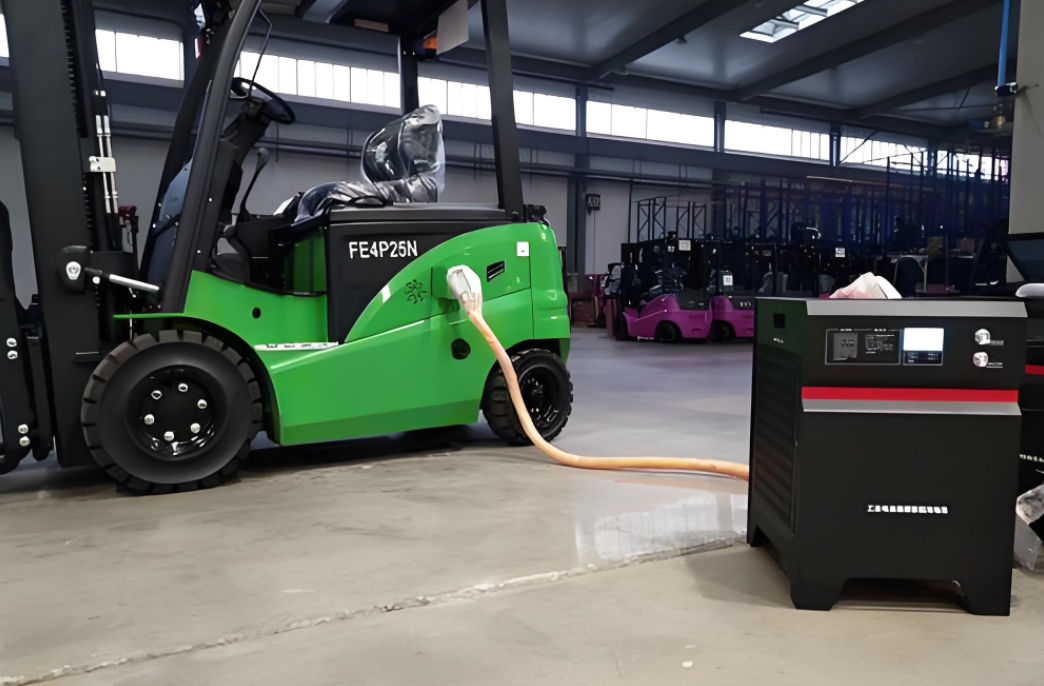
- Fast charging: 1–2 hours to full charge vs 8–10 hours for lead-acid
- No memory effect: Can be opportunity-charged any time
3. Battery Management Systems (BMS)
Modern lithium forklift batteries include a sophisticated Battery Management System that monitors:
- Individual cell voltage balancing
- Temperature at multiple points
- State of charge (SOC) and state of health (SOH)
- Charge/discharge current limits
- Short circuit and over-temperature protection
BaGong forklifts equipped with lithium batteries include a full BMS suite with diagnostics accessible via the LCD display.
4. Opportunity Charging Revolution
One of the biggest operational benefits of lithium is opportunity charging. Instead of swapping batteries mid-shift or dedicating 8+ hours to charging, operators can plug in during breaks and lunch:
- 15-minute break: +20% charge (1 hour of operation)
- 30-minute lunch: +40% charge (2+ hours of operation)
- Single shift: Full charge in 1–2 hours during the shift
This eliminates the need for battery change-out rooms, extra battery inventory, and dedicated charging staff.
5. Battery Recycling and Sustainability
The environmental benefits of lithium batteries extend beyond their operational life:
- Recyclable: 95% of lithium battery materials are recyclable
- No hazardous gasses: Unlike lead-acid, no hydrogen emissions during charging
- No acid disposal: Eliminates hazardous waste disposal costs
- Lower carbon footprint: 50% less lifecycle CO₂ compared to diesel equipment
6. What to Look for in a Lithium Forklift
When evaluating lithium-powered electric forklifts, consider:
- Battery capacity (Ah): 200–600 Ah for standard 2–3 ton models
- BMS features: Cell balancing, temperature monitoring, overcharge protection
- Warranty: BaGong offers 5 years on lithium packs vs 1–2 years for lead-acid
- Battery compartment: Ensure it fits your existing equipment if retrofitting
Recommended BaGong Electric Forklifts
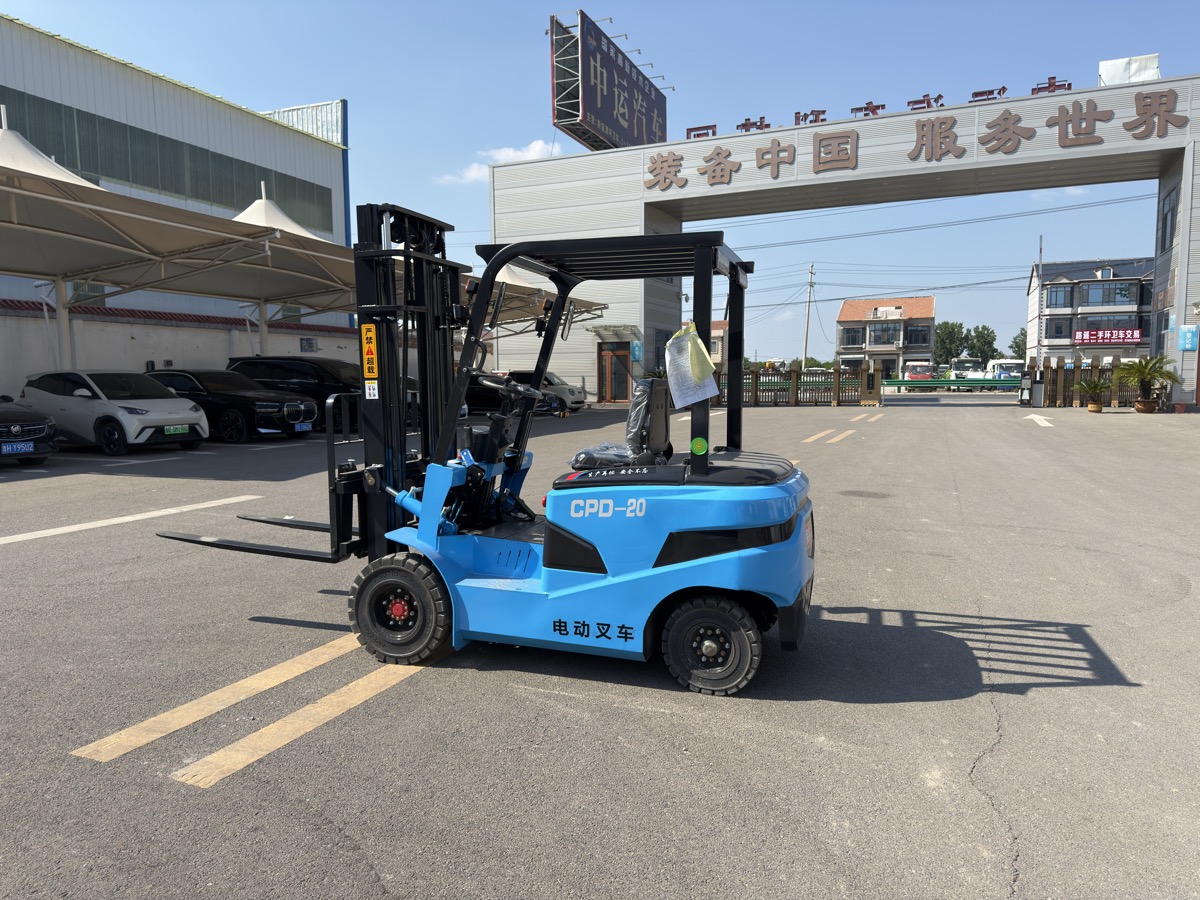
Looking for a reliable electric forklift? BaGong offers CE-certified electric forklifts with LiFePO4 batteries and maintenance-free AC motors. Lithium iron phosphate (LiFePO4) battery technology is widely recognized for its thermal stability and long cycle life. FOB Shanghai pricing with global shipping available:
- 2-ton Electric Forklift — Compact & versatile, ideal for warehouses and tight spaces
- 3-ton Electric Forklift — The workhorse — ideal for heavy-duty warehouse and logistics operations
Contact BaGong for a custom quote today.
BaGong Forklift Battery Options
BaGong Forklift offers both lead-acid (Chaowei) and lithium-ion (Zhonghang / Zefeng / Shengkang) battery configurations across our entire electric forklift range. All lithium models include:
- LiFePO4 chemistry for maximum safety
- Intelligent BMS with LCD diagnostics
- 1–2 hour fast charging capability
- 5-year manufacturer warranty
Contact us for a quote or technical specification sheet.

Great overview of the battery landscape! The shift to lithium is really accelerating—we switched half our fleet at our warehouse in Hamburg and the difference in charging speed alone has been worth the investment. Do you think solid-state batteries will make it to the forklift market by 2027?
Good overview of where battery tech is heading. We have been running a mixed lithium/lead-acid fleet for about 18 months now and the throughput difference is significant — lithium charges in under 2 hours versus 8+ for lead-acid, basically eliminating the need for battery swap rooms. The thermal management section was spot-on for our Australian summer operations.