

Blog
3-Wheel vs 4-Wheel Electric Forklifts: How to Choose the Right Configuration

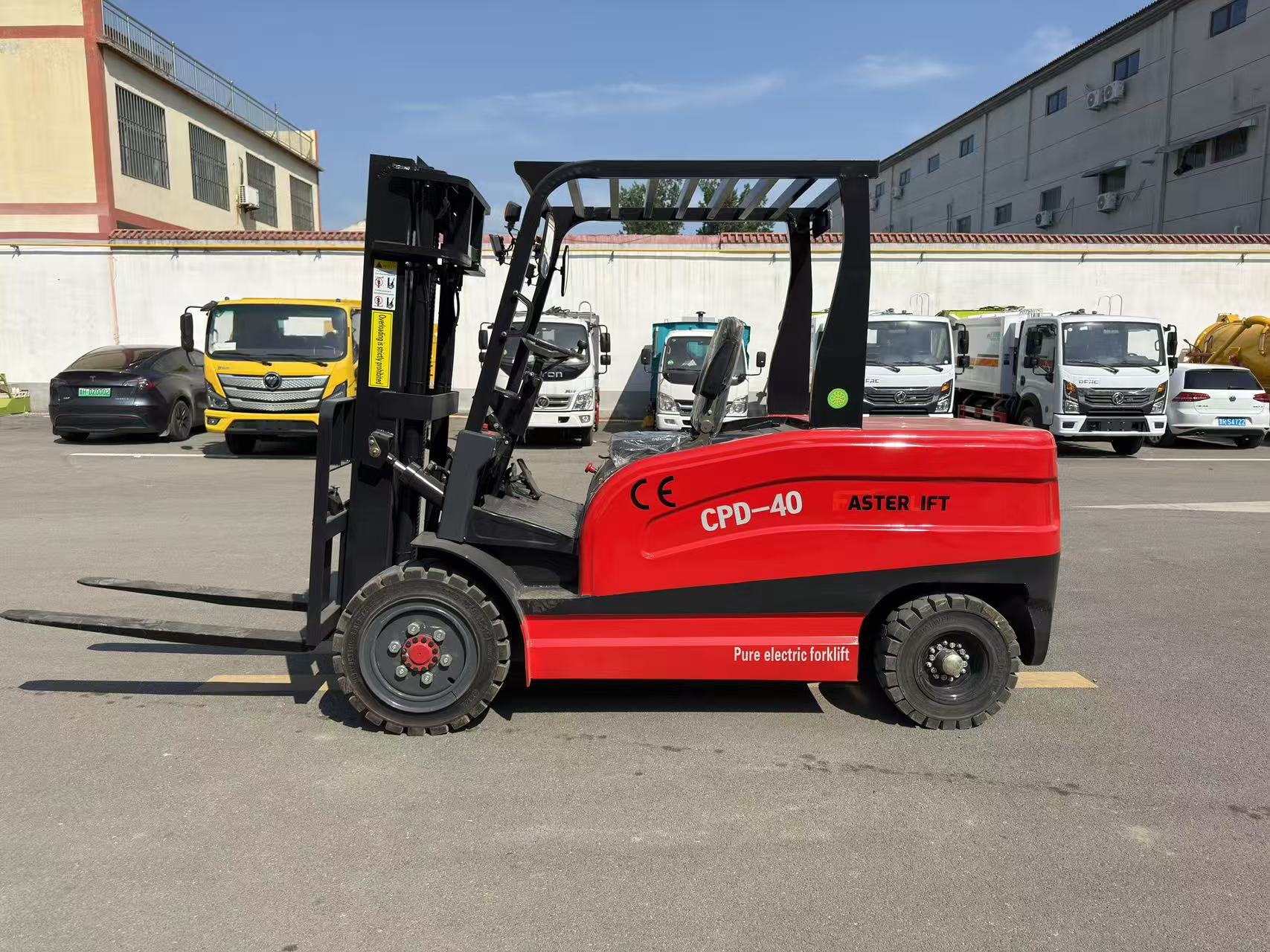
When shopping for an electric forklift, one of the first decisions you will face is whether to go with a 3-wheel or 4-wheel configuration. Both have their place in modern warehouses, but choosing the wrong one can cost you in maneuverability, stability, or operational efficiency.
3-Wheel Electric Forklifts: The Maneuverability Champion
Three-wheel electric forklifts use a single drive wheel in the rear with two load wheels up front. This design delivers a remarkably tight turning radius — often as low as 1.5 meters — making them ideal for narrow aisles, truck loading, and confined spaces where every inch counts.
The compact design also makes 3-wheel models slightly lighter and more energy-efficient during frequent direction changes. If your operation involves a lot of turning, stacking in tight racking, or working inside containers, a 3-wheel forklift can boost throughput significantly.
4-Wheel Electric Forklifts: Stability and Heavy Lifting
Four-wheel models distribute weight across two rear wheels, providing superior lateral stability. This matters when handling loads at maximum height or operating on slightly uneven surfaces — even indoors. A 4-wheel forklift feels more planted, especially with loads above 2.5 tons.
For outdoor-indoor mixed use, cold storage, or operations where operators change frequently, the familiar 4-wheel feel reduces the learning curve and improves operator confidence.
Key Decision Factors
- Aisle width: Under 3.2 meters? Go 3-wheel.
- Load weight: Above 2.5 tons regularly? 4-wheel offers better stability.
- Floor condition: Uneven or outdoor surfaces favor 4-wheel.
- Operator experience: 4-wheel feels more intuitive for novice drivers.
At BaGong, we offer both 3-wheel and 4-wheel electric forklifts from 2 to 4 tons, all powered by our proven AC motor system and available with LiFePO4 lithium or Chaowei lead-acid batteries. Our 3-ton electric forklift is a popular choice for warehouses needing the best of both worlds.
If you are still unsure which configuration fits your operation, check out our complete electric forklift buying guide or our narrow aisle forklift guide for more space-saving tips.
FAQ
Q: Can a 3-wheel forklift handle outdoor use?
3-wheel models are designed primarily for smooth indoor floors. For mixed indoor-outdoor use, a 4-wheel model with pneumatic tires is recommended.
Q: Is a 3-wheel forklift less stable than a 4-wheel?
At rated capacity on level ground, 3-wheel forklifts are perfectly stable. However, 4-wheel models offer greater lateral stability at high lift heights and on uneven surfaces.
Q: Which configuration is more energy efficient?
3-wheel forklifts typically consume slightly less energy during tight maneuvering, but the difference is modest — battery type (LiFePO4 vs lead-acid) has a much bigger impact on overall efficiency.
Need help choosing? Contact BaGong today — our team will help you select the right forklift for your specific warehouse layout and operational needs.
Great breakdown of the turning radius differences. For warehouse operators with tight corners, the 3-wheel advantage is real — we’ve seen a 15% cycle time improvement just from maneuverability alone.
This guide answered exactly the question I had about stability trade-offs. Would love to see a follow-up comparing these two configurations specifically for outdoor ramp operations.
Great comparison between 3-wheel and 4-wheel configurations. In our Birmingham warehouse we run both types – the 3-wheel units are incredible in tight aisles. Definitely factoring turning radius into our next fleet purchase.
Really helpful breakdown! I was torn between 3-wheel and 4-wheel for our new warehouse in Johannesburg. The turning radius point is crucial for us since aisle space is tight. After reading this, I think 3-wheel is the way to go for indoor use. Thanks for the clear comparison!
This is super helpful! We run a 3PL warehouse with aisles around 3.2 meters and have been debating between 3-wheel and 4-wheel for months. The turning radius comparison you provided really clarified things. One thing I would add — from our experience, 3-wheel models also tend to have slightly lower maintenance costs on tires since there is less scrubbing in tight turns. Has anyone else noticed that?