

Blog
Electric Forklift Lithium Battery Safety: The Charging Mistakes That Actually Cause Fires (and How to Avoid Them)


It was 2:47 AM when the night shift supervisor at a cold storage facility in Texas smelled something.
Not smoke, exactly. More like a sweet, chemical scent — the kind you’d brush off if you weren’t trained to pay attention. He followed it to the charging bay. One of their electric forklifts, a 2.5-ton unit that had been on charge for about five hours, was hotter than it should have been. The battery casing was warm to the touch. Not hot enough to burn skin, but warmer than ambient by a margin that didn’t feel right.
He pulled the plug. Called maintenance. They discovered a charging cable with internal damage — the outer jacket looked fine, but the copper inside had been degrading for weeks from repeated bending at a sharp angle. The resistance had been building up, generating heat, slowly cooking the connector.
No fire. No injury. No equipment loss. Just a maintenance bill and a very awake supervisor at 3 AM.
But here’s the thing: that facility had done almost everything by the book. They had the right batteries. The right chargers. Ventilation. Signage. What they didn’t have was a habit of looking at the stuff that doesn’t set off alarms — the slow failures, the gradual degradation, the “it’s been fine for two years so it’ll be fine tomorrow” assumptions.
This article is about those things. Not the sensational “lithium batteries explode” headlines that make for good clickbait but bad safety culture. The real stuff: what actually causes electric forklift battery incidents, why LiFePO4 chemistry changes the equation, and how to build a charging operation that doesn’t rely on luck.
The Chemistry Truth: Why LiFePO4 Forklift Batteries Are Not Your Phone Battery
Before we talk about risks, let’s clear up the biggest misconception in the room.
When people hear “lithium battery fire,” their brain goes to those viral videos of smartphones bursting into flames or e-bikes igniting in apartment buildings. Those are almost always NMC (Nickel Manganese Cobalt) or NCA (Nickel Aluminum Cobalt) batteries. They’ve got high energy density but a nasty habit called thermal runaway — when one cell overheats, it triggers a chain reaction that cascades through the entire pack. Temperatures can spike above 500°C (932°F) in seconds.
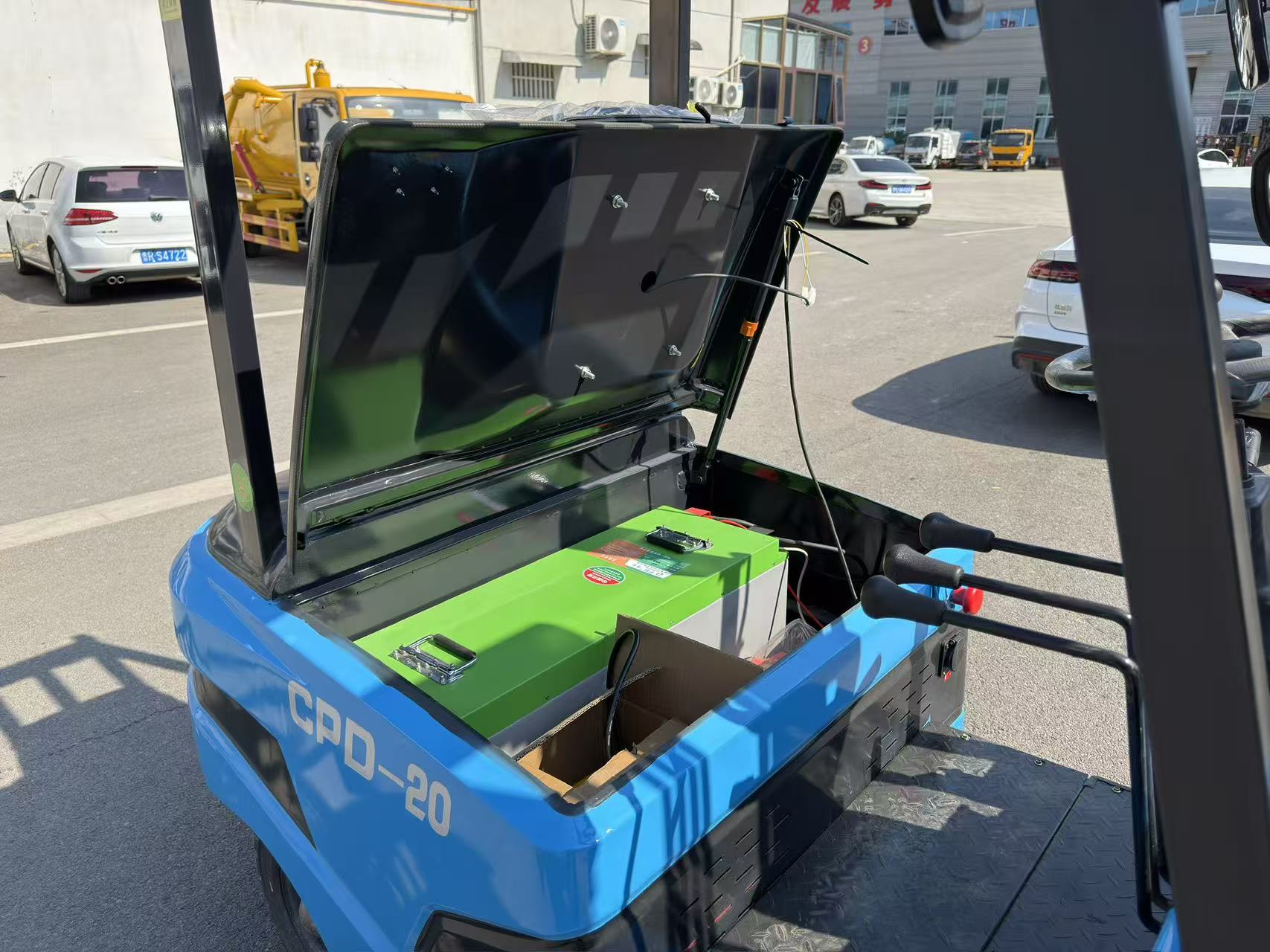
Electric forklifts from reputable manufacturers — including BaGong — use LiFePO4 (Lithium Iron Phosphate) batteries. The chemistry is fundamentally different.
| Battery Chemistry | Thermal Runaway Onset Temp | Energy Density | Common Applications |
|---|---|---|---|
| NMC (Nickel Manganese Cobalt) | ~200°C (392°F) | 150–220 Wh/kg | EVs, consumer electronics |
| NCA (Nickel Aluminum Cobalt) | ~180°C (356°F) | 200–260 Wh/kg | Tesla vehicles, power tools |
| LiFePO4 (Lithium Iron Phosphate) | >270°C (518°F) | 90–120 Wh/kg | Forklifts, buses, energy storage |
| Lead-Acid (for reference) | N/A (no thermal runaway) | 30–50 Wh/kg | Legacy forklifts, automotive |
The phosphorus-oxygen bond in LiFePO4’s crystal structure is about twice as strong as the cobalt-oxygen bond in NMC. That means when you abuse a LiFePO4 cell — overcharge it, puncture it, short it — it doesn’t release oxygen the way NMC does. No oxygen release, no fuel for the fire. The chemistry is inherently stable.
This is why OSHA’s own research and the NFPA 505 standard specifically treat lithium iron phosphate differently from other lithium-ion chemistries in industrial settings. If your forklift runs on LiFePO4, you’re starting from a much safer baseline than the internet would have you believe.
But. And this is a big but. “Safer” doesn’t mean “safe enough to ignore.” The most common electric forklift battery incidents have nothing to do with the cells themselves. They’re electrical fires, connector failures, and charging infrastructure problems — all of which can happen regardless of battery chemistry.
The Five Real Charging Risks Nobody Talks About
Let’s skip the theoretical stuff you can find on Wikipedia. Here’s what I’ve seen and heard from operators, service techs, and facility managers in the field.
1. Damaged Charging Cables: The Silent Killer
That Texas cold storage story? That’s not an outlier.
Charging cables in forklift operations take abuse that would make an EV owner cry. They get run over. Pinched between the forklift and the charging station. Bent at impossible angles when operators rush to plug in. Exposed to oil, cleaning chemicals, and temperature swings.
The problem is that cable damage often hides under the outer jacket. A technician from a logistics hub in Dubai told me they pulled apart a cable that “looked fine” and found 40% of the copper strands broken at the bend point. The remaining 60% were carrying the full charging current, creating a hot spot that had been slowly baking the insulation for months.
What to actually do about it:
- Bend radius matters more than you think. A cable bent tighter than 8× its diameter accelerates internal strand breakage.
- Feel the cable near the connector after 30 minutes of charging. Warm is normal. Hot is not.
- Replace cables with visible outer jacket damage immediately — don’t tape them. Electrical tape is not a structural repair.
- Consider charging stations with cable management arms or retractable reels. They cost more upfront but save thousands in replacement cables and eliminate a fire risk.
2. Mismatched Chargers: The “It Works, Doesn’t It?” Problem
This one is surprisingly common, especially in operations that upgrade from lead-acid to lithium but keep their old charging infrastructure.
Lithium batteries and lead-acid batteries need fundamentally different charging profiles. A lead-acid charger uses a three-stage profile (bulk, absorption, float) with voltage parameters designed for lead chemistry. Plug a LiFePO4 battery into that, and you’re feeding it a charging curve it wasn’t designed for.
Best case: the BMS (Battery Management System) rejects the charge. Worst case: the BMS isn’t sophisticated enough to catch it, and you’re slowly overcharging cells — which, in any lithium chemistry, is how you get degradation, swelling, and eventually thermal events.
| Charger Type | Compatible With | Risk If Mismatched |
|---|---|---|
| Lead-acid charger | Lead-acid only | Overcharging, BMS rejection, cell damage |
| Generic “lithium” charger | Li-ion (general), verify specs | May not match LiFePO4 voltage curve |
| LiFePO4-specific charger | LiFePO4 batteries | ✅ Safe, optimized charging |
| Smart charger w/ selectable profile | Multiple chemistries | ✅ Safe if correct profile selected |
Rule of thumb: the charger should come from the same manufacturer as the battery, or at minimum be explicitly rated for LiFePO4 chemistry at the exact voltage and capacity of your pack. BaGong forklifts ship with matched Chaowei LiFePO4 batteries and compatible chargers — this isn’t something to mix and match.
3. Charging Too Fast (Especially in Hot Environments)
Everybody wants faster charging. More uptime, more productivity. But lithium batteries have a charging speed limit, and pushing past it in high ambient temperatures is asking for trouble.
The C-rate matters. If your battery is rated for 0.5C charging, a 100Ah pack should charge at no more than 50 amps. Push 100 amps through it (1C), and you’re generating significantly more internal heat. In a 35°C (95°F) warehouse — common in Southeast Asia, the Middle East, and southern U.S. states — the battery already starts warm. Add aggressive charging, and internal cell temperatures can climb into territory where the separator starts degrading.
This isn’t a fire-tomorrow problem. It’s a battery-life-drops-by-40% problem, and occasionally, a battery-swells-and-needs-emergency-replacement problem.
Practical approach:
- Charge at the manufacturer’s recommended C-rate, not the maximum the charger can deliver.
- If your charging area is consistently above 30°C (86°F), add ventilation or active cooling fans. It’s cheap insurance.
- LiFePO4 batteries with active thermal management (fans, cooling channels) can handle faster charging safely. Passive-cooled packs need more conservative rates.
4. Charging Immediately After Heavy Use
An operator finishes a shift, parks the forklift, plugs it in, goes home. Seems responsible, right?
The problem: after eight hours of heavy lifting, a LiFePO4 battery’s internal temperature can be 10–15°C above ambient. Plugging it straight into a charger adds charging heat on top of that residual heat. The BMS should protect the battery — and quality BMS units do — but you’re still thermal-cycling the cells more aggressively than necessary.
Most manufacturers recommend a 15–30 minute cool-down period between heavy operation and charging. It’s a small operational change that extends battery life significantly.
5. Charging in Poorly Ventilated Enclosed Spaces
Even though LiFePO4 batteries don’t off-gas hydrogen the way lead-acid batteries do (lead-acid charging releases explosive hydrogen gas — a whole different safety chapter), enclosed spaces still create risk.
The risk isn’t gas. It’s heat accumulation. Put a charging forklift in a tight corner with no airflow, and the charger, battery, and cables all generate heat that has nowhere to go. Over an 8-hour charge cycle, that ambient temperature can climb 5–10°C in the immediate vicinity. Multiplied across three or four forklifts charging simultaneously, you’ve got a localized hot zone.
Minimum ventilation setup:
- At least 1 air change per 15 minutes in the charging area (per ASHRAE industrial ventilation guidelines)
- Temperature monitoring — a $50 wall-mounted thermometer is enough
- Keep at least 1 meter (3 feet) of clearance around each charging station for airflow
Building a Forklift Charging Station That Doesn’t Keep You Up at Night
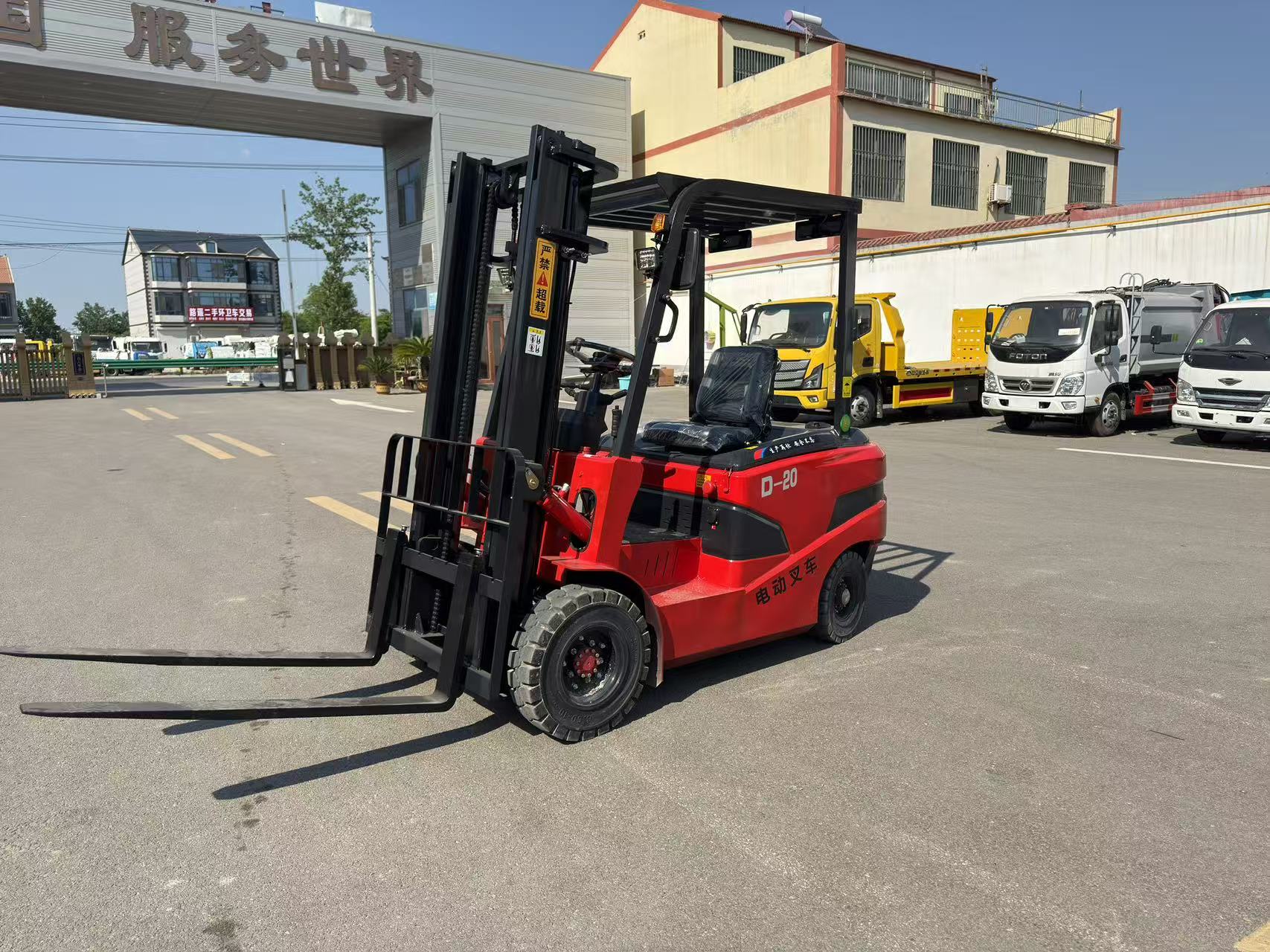
Rather than write another generic “best practices” list, here’s a checklist structured the way an actual facility manager would use it — organized by what you can do today, this week, and this quarter.
Immediate Actions (Today)
- ☐ Walk the charging area. Look for: cables on the floor (trip + crush hazard), visible jacket damage, connectors resting on metal surfaces.
- ☐ Touch-test charging cables after 30 minutes of operation. Any hot spots?
- ☐ Verify every charger matches its battery. Look at the label — does it say LiFePO4?
- ☐ Check that fire extinguishers in the charging area are rated for electrical fires (Class C in the U.S., or CO₂/dry powder type).
- ☐ Make sure operators know: if a battery or charger feels unusually hot, smells unusual, or makes a humming/buzzing sound that’s new — unplug and report. Do not “wait and see.”
This Week
- ☐ Install a simple temperature log. Doesn’t need to be fancy — a $30 digital thermometer with min/max memory, checked daily.
- ☐ Create a cable inspection schedule. Weekly visual check, monthly hands-on inspection. Write it down.
- ☐ Add a 15-minute cool-down policy between shift end and charging start. Put it in the operator briefing.
- ☐ Check clearance: every charging station should have ≥1 meter of open space on all sides.
This Quarter
- ☐ Consider upgrading to chargers with built-in thermal monitoring and automatic shutoff if temperatures exceed safe thresholds.
- ☐ If operating in a hot climate, evaluate active cooling for the charging area — even a $200 industrial fan makes a measurable difference.
- ☐ Review your battery warranty terms. Some manufacturers void warranties if charging conditions don’t meet spec — and you don’t want to find that out after a failure.
What OSHA and NFPA Actually Require
Let’s skip the vague “follow all applicable regulations” boilerplate and look at what the specific standards actually say.
OSHA 1910.178(g) — the section on changing and charging storage batteries — has been the standard for decades. Its key points for lithium battery operations:
- Charging installations shall be located in areas designated for that purpose (1910.178(g)(1))
- Facilities shall be provided for flushing and neutralizing spilled electrolyte (this is primarily a lead-acid requirement — LiFePO4 batteries are sealed and don’t spill acid)
- Adequate ventilation for dispersal of fumes from gassing batteries (again, primarily lead-acid; LiFePO4 batteries don’t gas during normal operation)
- A conveyor, overhead hoist, or equivalent material handling equipment shall be provided for handling batteries (1910.178(g)(4)) — relevant for larger forklift batteries that require lifting
- Smoking and open flames shall be prohibited in charging areas
NFPA 505 (Fire Safety Standard for Powered Industrial Trucks) — updated to address lithium-ion batteries specifically in its 2024 edition — adds:
- Lithium-ion battery charging areas should have a designated fire response plan that accounts for the specific characteristics of lithium battery fires (even though LiFePO4 is less prone to thermal runaway, first responders should know what’s on site)
- Battery management systems must be listed or recognized by a nationally recognized testing laboratory
- Charging equipment must be listed for use with the specific battery chemistry
The practical takeaway: current regulations were primarily written for lead-acid operations, as lithium forklift adoption has outpaced regulatory updates. That means the responsibility for safe lithium battery charging falls more heavily on the operator and the equipment manufacturer than the regulations explicitly require. This is gradually changing — the 2024 NFPA 505 update is a step in the right direction — but for now, following manufacturer guidelines isn’t just good practice. It’s filling a regulatory gap.
Warning Signs You Should Never Ignore
From conversations with service technicians and operators across multiple facilities, here are the red flags that precede most charging-related incidents:
- The charger fan runs constantly at full speed. Chargers have thermal management for a reason. If the cooling fan is maxed out all the time, something is generating more heat than expected.
- The battery casing feels warm in one spot but cool everywhere else. Uneven heating suggests a cell imbalance or a localized internal issue. A battery at the end of charging should feel uniformly warm, or not warm at all (good BMS thermal management).
- Charge times are getting longer. Same battery, same charger, but it takes 30 extra minutes to reach full charge. This means internal resistance is increasing — a sign of cell degradation that could eventually lead to overheating during charging.
- The BMS is throwing error codes you’ve been clearing without investigating. BMS systems are not dramatic. When they flag an issue, it’s usually because something is measurably wrong — cell voltage imbalance, temperature excursion, communication error with the charger. Clearing the code without diagnosing the cause is like taping over a check engine light.
- You smell a sweet or “electrical” odor during charging. This could be overheating insulation, a failing capacitor in the charger, or — in very rare cases — electrolyte venting from a damaged cell. Any unusual smell during charging is a stop-and-inspect situation, not a monitor-and-decide-later one.
The Bottom Line
Electric forklifts running on LiFePO4 batteries are genuinely safe. The chemistry is stable. The failure modes are well understood. When incidents happen, they’re almost always the result of neglected infrastructure — damaged cables, mismatched chargers, ignored warning signs — rather than battery chemistry failures.
The Texas supervisor who caught the hot cable at 2:47 AM did everything right after the problem started. The real lesson is: the best charging safety program catches problems before they start showing symptoms. Walk the charging area weekly. Train operators to treat unusual heat, smells, and sounds as stop-work events. Match your chargers to your batteries, and your batteries to your operation.
That’s not exciting. It won’t make headlines. But it’ll keep your warehouse from becoming one.
Frequently Asked Questions
Q: Can a LiFePO4 forklift battery catch fire?
It is extremely rare under normal operating conditions. LiFePO4 chemistry has a thermal runaway onset temperature above 270°C (518°F) — significantly higher than NMC or NCA batteries. When LiFePO4 forklift fires do occur, investigation almost always traces back to charging infrastructure failure (damaged cables, short circuits, incompatible chargers) rather than the battery cells themselves.
Q: Do I need a special fire extinguisher for lithium battery fires?
For LiFePO4 forklift batteries specifically, a standard Class C (electrical) fire extinguisher or CO₂ extinguisher is appropriate for most incidents involving the charging system or electrical components. Specialized lithium-ion fire extinguishers exist but are more relevant for NMC/NCA battery fires. That said, your local fire marshal should be the final authority on what equipment is appropriate for your specific installation.
Q: How long can I leave an electric forklift on the charger?
Quality LiFePO4 batteries with a functioning BMS can safely remain connected to the charger after reaching full charge — the BMS will stop accepting current. However, leaving batteries on charge indefinitely is not recommended. Best practice: unplug within 1–2 hours of full charge. This reduces unnecessary trickle current, extends BMS component life, and minimizes the window of time where a charging infrastructure failure could go unnoticed.
Q: What’s the minimum clearance around a forklift charging station?
NFPA and OSHA don’t specify exact inches for lithium electric forklift charging areas (their clearance requirements focus on egress paths and flammable materials, not charging equipment spacing). As a practical minimum, maintain 1 meter (3 feet) on all sides of the charging station for airflow and emergency access. Increase to 1.5 meters (5 feet) if multiple chargers are adjacent.
Q: Can I charge an electric forklift outdoors?
Yes, with caveats. The charger must be rated for outdoor use (IP54 or higher). The battery should be protected from direct rain exposure and extreme temperatures during charging. LiFePO4 batteries charge most efficiently between 0°C and 45°C (32°F–113°F). Charging below 0°C without a battery heating system can cause lithium plating and permanent capacity loss.
Looking for an Electric Forklift with Built-in Safety?
BaGong electric forklifts come standard with Chaowei LiFePO4 batteries, matched chargers, and intelligent BMS protection — all designed to work together from day one. Our charging systems are tested as a complete unit, not pieced together from different suppliers.
Available models (FOB Shanghai):
- 2-Ton Electric Forklift — $4,400 (lead-acid) / $6,200 (LiFePO4) → View Product
- 2.5-Ton Electric Forklift — $5,250 (lead-acid) / $7,200 (LiFePO4) → View Product
- 3-Ton Electric Forklift — $6,050 (lead-acid) / $8,050 (LiFePO4) → View Product
Related reading:
- Multi-Shift Electric Forklift Charging Guide for 24/7 Operations
- LiFePO4 Forklift Batteries: The Industry Standard Guide for 2026
- Electric Forklift Battery Maintenance: A No-Nonsense Guide
Have questions about charging safety or need help sizing the right forklift for your operation? Contact BaGong Machinery — we speak forklift, not sales scripts.