

Blog
The Electric Forklift Boom Outside the West: Why Southeast Asia, Middle East & Africa Are Driving Global Growth in 2026

Here’s a stat that stopped me mid-scroll: electric forklift shipments to the Middle East grew 47% year-over-year in Q1 2026. Southeast Asia? Up 34%. Africa — from a tiny base, granted — jumped 61%.
Meanwhile, the US market posted somewhere around 6%. Europe, 8%. These aren’t guesses — they track with China Customs export data and Interact Analysis shipment figures for the first quarter.
If you work in logistics, warehousing, or equipment procurement, here’s the uncomfortable thing nobody’s saying out loud: the conventional wisdom about where forklift growth lives is wrong. The real action in 2026 isn’t in mature markets doing replacement cycles. It’s in regions building warehouses and factories from scratch — and buying electric forklifts as their default equipment.
Let me walk you through what’s actually happening, with real numbers, regional breakdowns, and — most importantly — what it means if you’re the person who has to sign the purchase order.
The Numbers Don’t Lie: Where Growth Actually Lives
Before we go regional, let’s anchor on the big picture. The global electric forklift market hit roughly $48 billion in 2025, growing at 12–14% annually depending on whose estimates you trust. Interact Analysis pegs total unit shipments at about 1.6 million globally, with electric models passing 65% of the mix — up from 55% five years ago.
But aggregate numbers hide the real story. Here’s what the regional breakdown actually looks like:
| Region | 2025 Market Share | YoY Growth (Q1 2026) | Growth Driver |
|---|---|---|---|
| North America | ~26% | 6% | Replacement cycle; slow fleet electrification |
| Europe | ~28% | 8% | Emissions regulations; mature replacement market |
| Asia-Pacific (ex-China) | ~22% | 34% | Manufacturing relocation from China (“China +1”) |
| Middle East & North Africa | ~8% | 47% | Mega-projects, port expansions, logistics hub investment |
| Sub-Saharan Africa | ~3% | 61% | Infrastructure buildout, Belt & Road port projects |
| Latin America | ~5% | 18% | Nearshoring manufacturing; mining logistics |
The pattern is clear: the fastest-growing regions aren’t the biggest ones. They’re the ones where industrialization is happening right now — cement being poured, roofs going up, containers arriving. That’s fundamentally different from selling forklifts into replacement cycles. It’s new demand, new budgets, and often, first-time forklift buyers who don’t have a decade of brand loyalty clouding their judgment.
Southeast Asia: The Manufacturing Corridor That Reshaped Demand
In 2022, “China +1” was a boardroom talking point. In 2026, it’s infrastructure — and a lot of it needs forklifts.
Foxconn has committed over $1.5 billion to Vietnamese manufacturing. Samsung operates six factories in Vietnam alone, employing 100,000+ people. Apple’s supply chain now spans four ASEAN countries with over 15 facility locations. Every factory, every sub-supplier, every third-party logistics warehouse serving those operations needs material handling equipment.
Vietnam imported an estimated 18,000+ electric forklifts from China in 2025. Thailand, roughly 12,000. Indonesia — riding its nickel processing boom (the raw material feeding the very batteries in these forklifts) — imported around 15,000. Malaysia and the Philippines added another 8,000–10,000 combined.
What’s particularly interesting is the purchasing pattern. These aren’t speculative buys by distributors hoping to resell. They’re direct orders from manufacturers and logistics operators who need equipment to move actual product. A Vietnamese electronics assembly plant that just won a contract from a major OEM doesn’t “consider” buying forklifts — they buy forklifts because the production line is starting next month.
And here’s the twist: the same Chinese manufacturers that built China’s original export supply chains are following their customers south. BaGong, BYD, Heli, Hangcha, Lonking — they’ve all expanded ASEAN distribution networks in the past 24 months. The reason isn’t strategic brilliance; it’s common sense. Their industrial customers moved to Vietnam and Thailand. The forklifts followed.
For a procurement manager in Ho Chi Minh City or Bangkok in 2026, the math has flipped completely. Five years ago: buy a premium Japanese forklift, or gamble on a no-name import with uncertain support. Today: buy a LiFePO₄ electric forklift with an AC drive motor and Chaowei battery, shipped from Shanghai, with spare parts warehoused in-country — for roughly 40% less than the Toyota equivalent. That’s not a “trend.” That’s a structural repricing of an entire equipment category in one of the world’s fastest-growing industrial regions.
Middle East: Mega-Projects Don’t Buy Diesel Anymore
NEOM gets all the headlines, but it’s one of a dozen major projects driving forklift demand across the Gulf.
DP World handled over 88 million TEUs across its global portfolio in 2025, and its Jebel Ali flagship is mid-way through a $1.2 billion expansion. Qatar’s Hamad Port expansion targets 2027. Oman’s Duqm port is positioning as a Red Sea-Indian Ocean transshipment node. Saudi Arabia’s logistics sector grew 14% in 2025 alone, fueled by Vision 2030’s mandate to make the Kingdom a global logistics hub.
Every one of those port expansions, logistics parks, and cold storage facilities needs forklifts. The Dubai Logistics City expansion alone is projected to add 2,000+ new units by 2027. NEOM’s Oxagon port infrastructure needs an estimated 1,500 in its first phase.
But here’s the part that surprises people: these projects are increasingly specifying electric forklifts — in the desert. In 50°C (122°F) summer heat. The assumption that “electric can’t handle the Gulf” is dying, and fast.
Modern LiFePO₄ batteries with active thermal management hold up remarkably well in high ambient temperatures. Lead-acid batteries used to lose 30–40% of capacity in desert conditions; a well-designed LiFePO₄ pack with proper BMS delivers rated performance at 50°C ambient. The electric motor itself runs cooler than a diesel engine in the same conditions — fewer moving parts, less friction, no combustion heat. The fans work harder, the cooling loop draws a bit more power, but the forklift runs.
For Chinese manufacturers, the Gulf isn’t just a growing market — it’s a reference case. “Our electric forklifts run three shifts in Dubai in August” is a powerful line in a sales meeting in Texas or Australia. If you can sell electric forklifts into the Middle East, you can sell them anywhere (especially if you’ve already done the TCO math and proven the savings).
Africa: Leapfrogging, Not Catching Up
Let’s be honest: Africa imported fewer electric forklifts in 2024 than the Netherlands did. The continent’s share of the global market is barely 3%.
But that’s exactly the point — and it’s why the 61% growth rate, while off a low base, tells a real story.
The driver isn’t organic industrial growth (though there’s some of that). It’s Belt and Road infrastructure: ports, railways, industrial parks. Chinese state-owned enterprises have delivered or are building major port projects in Djibouti, Kenya (Mombasa), Tanzania (Bagamoyo), Nigeria (Lekki Deep Sea Port), and Ghana (Tema expansion). Each port generates an ecosystem — container yards, bonded warehouses, cold chain facilities, inland container depots — and each of those facilities needs forklifts.
Kenya’s LAPSSET corridor links Lamu Port to South Sudan and Ethiopia. Tanzania’s Standard Gauge Railway connects Dar es Salaam to the interior, unlocking landlocked markets. Ethiopia’s 13 operational industrial parks host factories for major global brands including PVH (Calvin Klein, Tommy Hilfiger) and multiple H&M suppliers. These aren’t aid projects — they’re commercially viable factories producing goods for export to Europe and North America.
What’s striking from a forklift perspective is the technology leapfrogging. African buyers aren’t going through the diesel → electric transition that Europe and North America are slogging through. They’re going from manual labor directly to electric forklifts, because there’s no installed base of diesel equipment to justify, no diesel fuel supply chain to protect, and no mechanic ecosystem trained on internal combustion forklift repair.
Compare that to how we’ve covered the electric vs diesel forklift debate — that whole discussion is largely irrelevant to a warehouse operator in Nairobi who’s currently moving pallets by hand. The competitor isn’t a used Toyota diesel. It’s four guys and a hand truck. Against that baseline, even a basic LiFePO₄ electric forklift is a 10× productivity improvement with a payback measured in months, not years.
Why Chinese Manufacturers Are Winning These Markets — And It’s Not Just Price
The lazy explanation is “Chinese forklifts are cheap.” That was true in 2018. In 2026, it misses the point entirely.
There are five structural reasons Chinese electric forklift manufacturers are dominating emerging-market growth in ways the legacy Japanese and Western brands cannot easily replicate:
1. The shipping lane is already running. China is the largest trading partner for over 120 countries. The freight forwarders, customs brokers, and container routes connecting Shanghai to Lagos, Jakarta, and Jeddah are the busiest in the world. Adding a forklift to a container already headed to Mombasa or Ho Chi Minh City adds near-zero marginal logistics cost.
2. Battery integration is vertical, not outsourced. China controls roughly 80% of the global LiFePO₄ supply chain — from lithium hydroxide processing to cell manufacturing to pack assembly. When BaGong ships a forklift with a Chaowei battery, that battery didn’t come from a third-party supplier who marked it up. It came from an integrated ecosystem where AC motor, controller, and battery are spec’d together from the start. The cost difference from vertical integration is structural, not negotiable.
3. Product-market fit for tough environments. Chinese manufacturers build for the operational realities of emerging markets: inconsistent grid power, dust, heat, limited access to specialized technicians. These forklifts are designed to charge from a wider voltage range, tolerate rougher surfaces, and keep running with simpler, more accessible components. A forklift designed for a German automotive plant with a dedicated maintenance bay and 480V three-phase power is over-engineered for a warehouse in Lagos — and overpriced for that market.
4. No legacy diesel business to protect. Toyota Material Handling, Mitsubishi Logisnext, Hyster-Yale — these companies have multi-billion-dollar diesel forklift franchises. Every electric forklift they sell potentially cannibalizes a higher-margin ICE sale, creating internal resistance that slows their pivot. Chinese manufacturers have negligible diesel market share globally. They can go all-in on electric without internal friction. In emerging markets, they show up with an electric-first portfolio while legacy brands are still trying to sell propane.
5. Local support networks aren’t starting from zero. BYD has 30+ dealerships across Africa. Heli has partnerships in 50+ countries. Even smaller brands like BaGong are building distributor networks — and in many cases, the distributors are the same companies that have been selling Chinese construction equipment (excavators, loaders, cranes) for a decade. They know the customers. They have service technicians. They have warehouses for parts. The forklift is just a new SKU in an existing channel.
What This Actually Means for Forklift Buyers
OK, the macro picture is interesting. But if you’re the person responsible for buying forklifts — whether you’re in Chicago, Rotterdam, Sydney, or Nairobi — what does any of this mean for your next purchase order?
If you buy in a developed market: The demand explosion in emerging markets is subsidizing your forklift. Seriously. Chinese manufacturers are running higher production volumes, spreading R&D costs across more units, and earning international certifications (CE, ANSI, ISO 9001) that make their products viable for your market too. The 3-ton electric forklift you’re comparing today is a better product at a lower price than it would be if it only sold into the US and EU. The Vietnamese factory that ordered 20 units last month is why your unit cost is $8,050 instead of $9,500.
If you buy in an emerging market: You’ve never had it better. The quality gap between “budget Chinese” and “premium Japanese” has narrowed to the point where it’s often a specification and support question, not a performance question. A Chinese electric forklift with a LiFePO₄ battery and AC motor in 2026 is objectively better in multiple dimensions — battery longevity, energy consumption per pallet moved, maintenance hours per year — than a lead-acid electric from a premium brand five years ago. The technology curve has bent sharply in your favor.
If you’re a dealer or distributor: The opportunity in secondary cities across emerging markets is enormous and underserved. The Saigon-Hanoi corridor has thousands of small-to-medium warehouses still using manual labor or equipment from the 1990s. A $4,400–$6,200 entry-level electric forklift that pays for itself through labor savings in 12–18 months is one of the easiest capital equipment sales in the world. The bottleneck isn’t demand. It’s service infrastructure — the distributors who figure out parts and service in underserved regions will own those markets for a decade.
Where BaGong Fits Into This Picture
Full disclosure: I work for BaGong Machinery, so take my opinion with the appropriate grain of salt. But here’s what the numbers say.
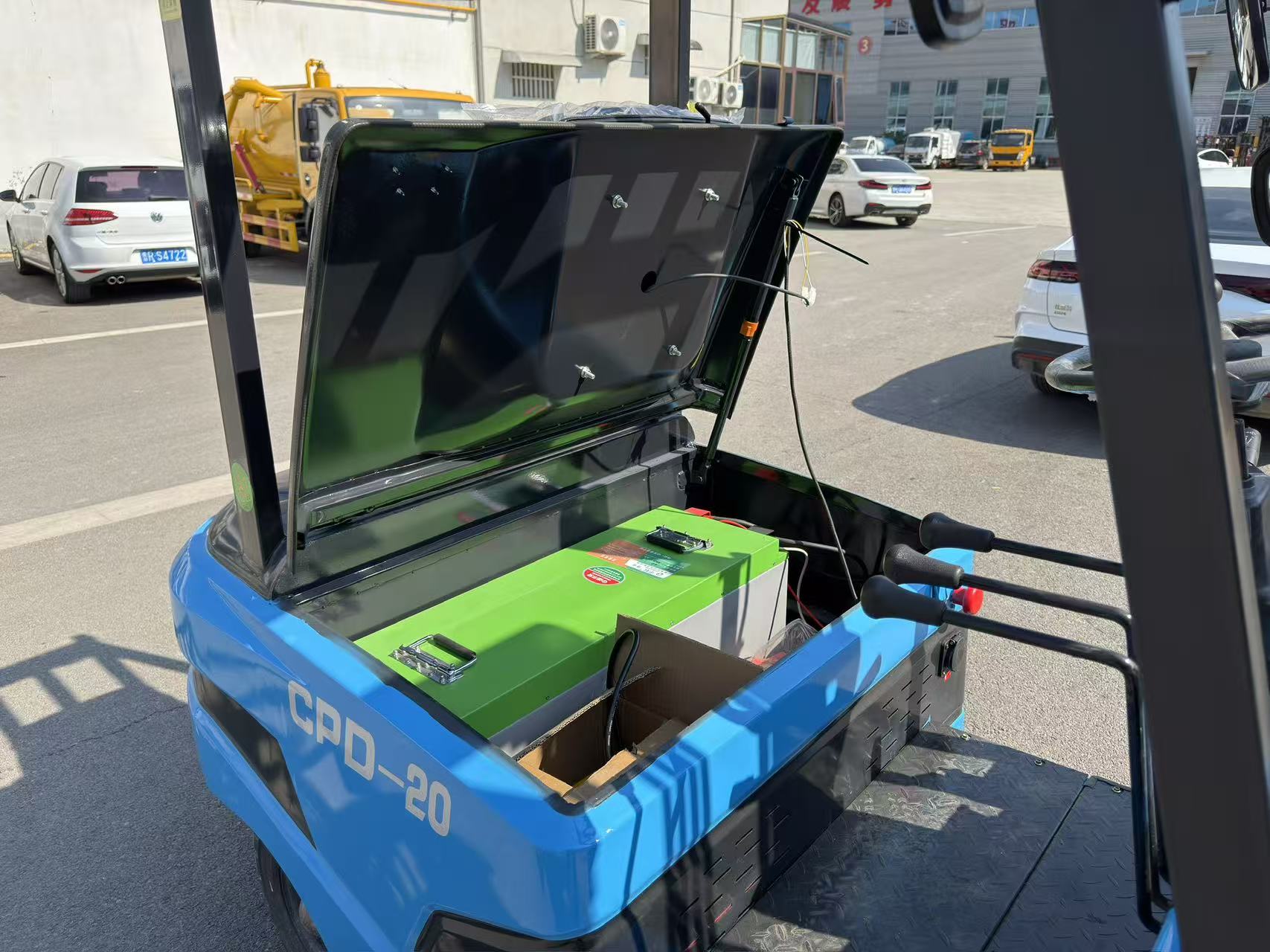
BaGong’s electric forklift lineup — 2-ton through 4-ton, all powered by Chaowei LiFePO₄ batteries with AC drive motors and CurTis AC controllers on selected models — lands in the price-performance zone that emerging-market buyers are looking for. FOB Shanghai pricing runs from $4,400 for a base 2-ton to $9,150 for a fully-specced 3.5-ton. That’s 30–40% below equivalent Japanese or European models, with component quality (Chaowei cells, AC induction motors, and ZF-style transmissions) that holds up in multi-shift operations.
We ship to over 20 countries. The fastest-growing destinations in 2026 are Saudi Arabia, Vietnam, Kenya, and Nigeria — exactly the markets this article is about. If you’re importing forklifts from China for operations in any of these regions, or building a distribution business around electric forklifts in emerging markets, we’d be happy to discuss specifications, pricing, and support options.
| Model | Base Price (FOB Shanghai) | Full Spec Price | Key Feature |
|---|---|---|---|
| 2-Ton Electric | $4,400 | $6,200 | Compact, ideal for light warehousing |
| 2.5-Ton Electric | $5,250 | $7,200 | Balanced workhorse for logistics centers |
| 3-Ton Electric | $6,050 | $8,050 | Heavy-duty, 3-shift capable |
| 3.5-Ton Electric | $7,150 | $9,150 | Maximum capacity for port and yard use |
Frequently Asked Questions
Are Chinese electric forklifts reliable enough for harsh environments like the Middle East or West Africa?
Yes — and the proof is in the field, not the spec sheet. LiFePO₄ batteries with active thermal management routinely perform at 45–50°C ambient temperatures that would cripple lead-acid batteries. AC drive motors have exactly one moving part (the rotor), so there’s far less to go wrong compared to a diesel engine with hundreds of moving components. The key is specifying the right battery management system (BMS) and ensuring the cooling system is sized for the ambient conditions. We’ve covered the battery technology in detail in our LiFePO₄ forklift battery guide.
What about tariffs and trade restrictions? Don’t they make Chinese forklifts more expensive?
They do — if you’re in the US or EU. Section 301 tariffs add up to 25% on Chinese forklifts entering the US. The EU is implementing its own measures. But here’s the thing: most emerging markets don’t have those tariffs. ASEAN countries have free trade agreements with China that reduce forklift import duties to 0–5%. GCC countries apply a flat 5%. Most African nations are below 10%. For a buyer in Vietnam, Saudi Arabia, or Kenya, the landed cost of a Chinese electric forklift is remarkably close to the FOB price — often within $300–500 of the factory gate price after freight and duties.
How do I handle after-sales service and spare parts in remote locations?
This is the question. BaGong works through in-country distributors who stock common parts locally — tires, contactors, controllers, battery components, hydraulic seals. Less common parts ship from China in 7–14 days to most ports. For remote locations, we offer remote diagnostics support via video call; many electrical issues can be diagnosed and resolved without a technician visit. We also strongly recommend a critical spares kit (about $500–800) with every initial order — it covers the parts most likely to need replacement in the first 2,000 hours.
Factory direct or local dealer — which is better?
It depends on volume and location. For 5+ units: go factory direct. The per-unit savings add up, and you’ll develop a direct relationship with the manufacturer’s support team. For 1–2 units and your first time buying Chinese equipment: use a local dealer. The $500–800 per unit you save going direct isn’t worth it if you’re 500km from the nearest support and something goes wrong. If you’re in a major city with an established dealer, let them earn their margin. Once you’re comfortable with the equipment and the brand, scale up direct.
What’s the actual lead time from order to delivery?
Standard configurations: 15–25 days production, then 5–10 days ocean freight to Southeast Asia, 15–20 days to the Middle East, 20–25 days to East Africa, and 30–40 days to West Africa. Custom specs or fleet orders add 10–15 days. From payment confirmation to forklift on your dock: typically 4–8 weeks depending on destination. For a deeper dive into the full import process, see our complete guide to importing forklifts from China.
Can a $4,400 forklift really hold up in daily use?
The $4,400 2-ton base model is designed for single-shift light-to-medium-duty applications: small warehouses, retail distribution, light manufacturing. It’s not the forklift you spec for a 24/7 port operation — that’s the $8,050 3-ton with the heavy-duty mast and larger battery. But for its intended application, yes, it holds up. The Chaowei LiFePO₄ battery is rated for 3,000–5,000 cycles. The AC motor is rated for 10,000+ hours. The frame is welded steel. It’s a simple machine, but simple machines tend to be reliable when they’re built with quality components. If you need a forklift to move 2 tons across a warehouse floor 8 hours a day, it does exactly that.
Ready to explore electric forklift options for your operations? BaGong Machinery offers LiFePO₄ electric forklifts from 2 to 4 tons, with Chaowei batteries, AC drive motors, and competitive FOB Shanghai pricing. We ship to 20+ countries with full after-sales support.
2-Ton Electric Forklift — $4,400–$6,200
2.5-Ton Electric Forklift — $5,250–$7,200
3-Ton Electric Forklift — $6,050–$8,050
3.5-Ton Electric Forklift — $7,150–$9,150
Contact us for a quote or dealer inquiry — we respond within 24 hours.