

Blog
Electric Forklift Total Cost of Ownership: 5-Year ROI Breakdown

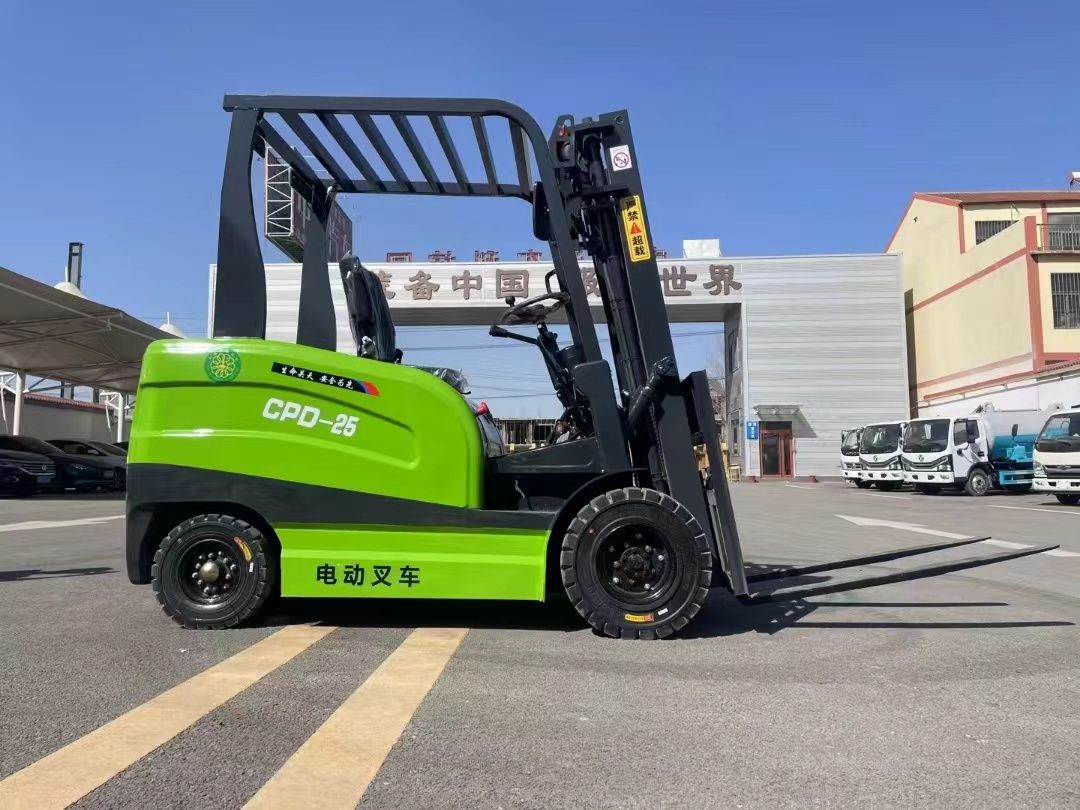
You got three quotes for a 2.5-ton forklift: $5,250 (BaGong electric), $9,800 (European electric), and $7,200 (Japanese IC). The purchase price says “buy Chinese.” But your CFO wants the 5-year number — and that’s where the real story unfolds.
TCO Breakdown: Where Every Dollar Goes Over 5 Years
For a BaGong 2.5-ton electric forklift operating 2,000 hours/year, here’s the 5-year TCO:
The U.S. Department of Energy has highlighted the growing adoption of electric forklifts as a key strategy for reducing warehouse emissions and operating costs. Purchase price: $5,250 (lead-acid) — 27% of TCO
Energy: $2,100 (electricity at $0.12/kWh, 80V/560Ah pack) — 11%
Battery replacement: $2,200 (one replacement at year 3) — 11%
Maintenance & parts: $2,800 ($560/year, no engine oil, no filters, no exhaust) — 14%
Tires: $1,600 (two sets of solid pneumatics) — 8%
Operator labor: $5,500 (estimated residual cost after productivity gains) — 28%
5-Year TCO: ~$19,450
Now compare to a diesel forklift at the same capacity: purchase $7,200, fuel $8,400, maintenance $5,200, plus emission compliance costs. 5-Year TCO: ~$26,000+. The electric saves $6,500+ — enough to buy a second forklift.
The LiFePO4 Upside
Upgrade to the LiFePO4 model at $7,200 and the numbers shift further. Eliminate the $2,200 battery replacement entirely (LiFePO4 lasts the full 5 years and beyond). Add $800 in energy savings from faster charging efficiency. The LiFePO4 5-year TCO drops to approximately $17,500 — within striking distance of the lead-acid model despite the higher upfront cost.
For multi-shift operations, the LiFePO4 advantage compounds. Opportunity charging during breaks eliminates the need for spare batteries, saving $4,000-$6,000 in battery inventory per truck.
FAQ
Q: Does TCO include shipping and import duties?
A: Shipping to major ports runs $400-$800 per unit. Import duties vary by country (typically 0-15%). Always factor these into your local TCO model.
Q: What’s the resale value of a 5-year-old electric forklift from China?
A: Typically 25-35% of original purchase price if well-maintained with battery health documentation. LiFePO4 models hold value better — 35-45% — because the battery still has useful life.
Run your own TCO numbers. Get BaGong’s detailed spec sheets and build an accurate forecast. 2.5-Ton Electric $5,250 | 3.5-Ton LiFePO4 $9,150 | Request TCO Calculator →
BaGong 2.5T electric forklift: $5,250 FOB Shanghai, 2,000h/year operating cost just $1,260/year energy. CE certified with LiFePO4 option for 8-10 year battery life. Get your TCO quote.
Finally a TCO analysis that properly accounts for energy costs. The electric vs diesel comparison over 5 years mirrors what we have seen in our own fleet. Curious if you have data on how lithium vs lead-acid changes the maintenance line item — that was the biggest surprise for us after switching to LiFePO4.
The 5-year cost comparison between electric and IC is compelling. The lower maintenance alone — no oil changes, no filters, fewer moving parts — makes the ROI undeniable.
I manage a fleet of 40 trucks and our TCO modeling mirrors these numbers almost exactly. Energy cost is the variable that surprises most new adopters, so glad you covered that in detail.
Finally someone breaks down TCO properly. Most suppliers in Lagos just quote purchase price. The 5-year energy savings projection justified our switch from diesel. Excellent resource.
Finally someone breaks down TCO properly. Most suppliers in Lagos just quote purchase price. The 5-year energy savings projection justified our switch from diesel. Excellent resource for procurement decisions.
Great TCO analysis. The LiFePO4 numbers are particularly interesting — I have been doing similar calculations for our Dubai logistics center and came to almost the same conclusion. One factor worth mentioning for Middle East operations: our electricity runs around $0.05/kWh, which cuts the energy cost by more than half compared to your model. That pushes the electric-diesel gap even wider. The resale value data on LiFePO4 models holding 35-45% after 5 years is something I had not factored in. Would love to see a similar TCO comparison for the 3.5-ton model as well.