

Blog
How Electric Forklift AC Motors Work — A Complete Guide for Buyers

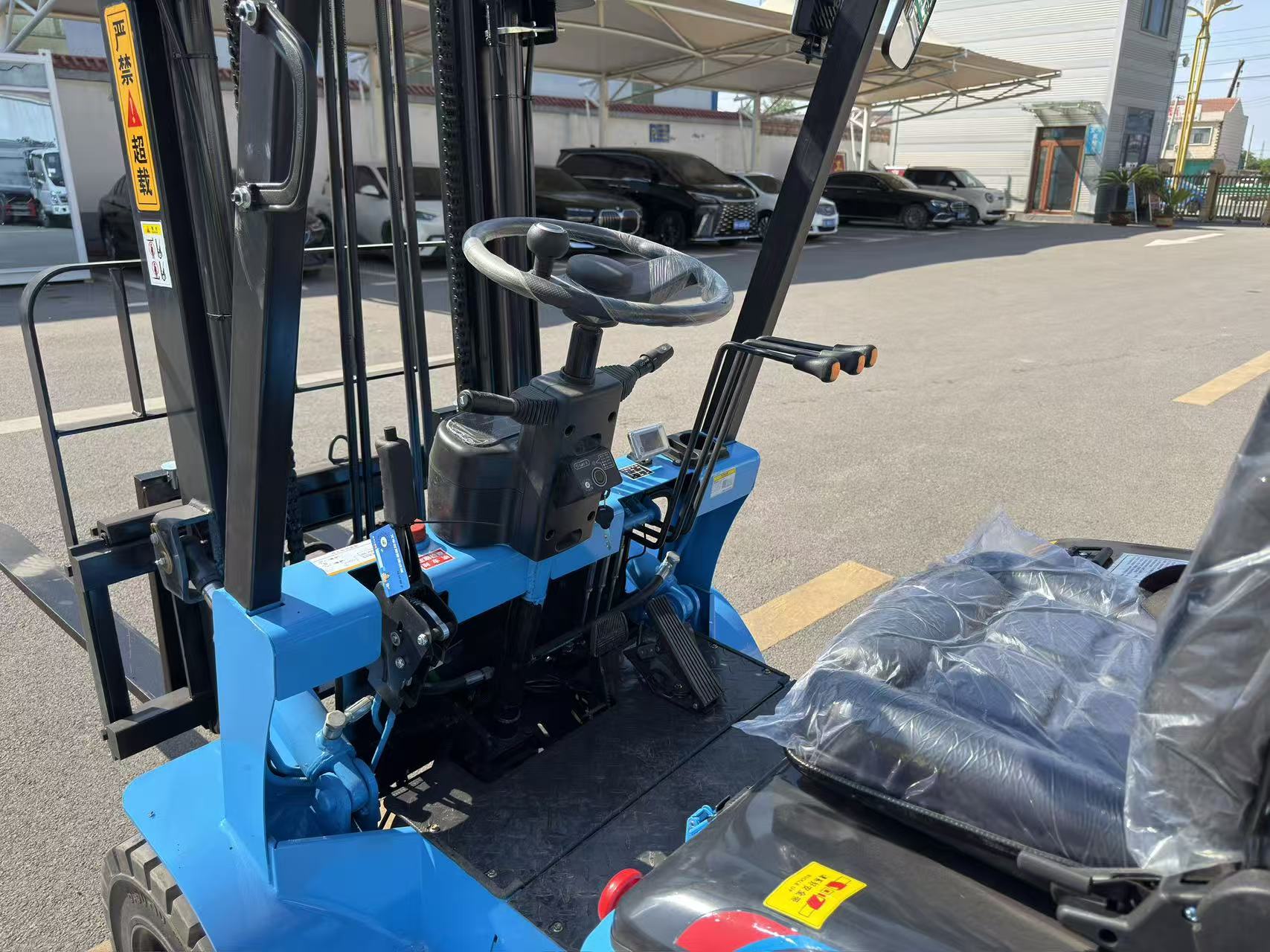
Your forklift’s motor just burned out mid-shift, and now you’re bleeding $800/hour in downtime. The culprit is almost always a brushed DC motor pushed beyond its limits. There’s a better way — and it’s been hiding in plain sight.
AC vs DC: The Difference That Saves You Money
Traditional DC forklift motors rely on carbon brushes that wear down, generate heat, and need replacement every 1,500-2,000 hours. AC induction motors have no brushes. No friction. No scheduled brush replacements. The rotor is a simple aluminum cage that spins inside a rotating magnetic field — think of it as a motor with one moving part.
BaGong electric forklifts use industrial-grade AC drive motors across the entire lineup — from the 2-ton compact to the 3.5-ton heavy lifter. The result: 92%+ energy efficiency versus 75-80% for comparable DC motors. As noted by industry reference materials on forklift technology, modern electric forklifts have evolved significantly from early internal combustion designs. That difference alone can save $1,200-$1,800 per truck per year in electricity costs.
BaGong electric forklifts use AC induction motors across the entire lineup — 2T to 3.5T. No brushes, 92%+ efficiency, 1,500-2,000h between any service visits. FOB Shanghai from $4,400. The U.S. Department of Energy has highlighted the growing adoption of electric forklifts as a key strategy for reducing warehouse emissions and operating costs. Compare AC motor models.
Why AC Motors Outperform in Real Warehouse Conditions
Three advantages matter most in daily operation. First, instant torque — AC motors deliver full power from 0 RPM, meaning no hesitation when lifting a pallet off a truck bed. Second, regenerative braking — every time you decelerate or lower a load, the motor becomes a generator, feeding power back to the battery. Third, sealed design — no vents, no dust ingress, IP54-rated protection that keeps grinding through dusty warehouses and humid loading docks.
A common misconception: AC motors are “harder to repair.” The opposite is true. With no brushes to replace and no commutator to resurface, the only wear items are the bearings — rated for 20,000+ hours. Your maintenance team spends less time with a wrench and more time moving goods.
FAQ
Q: Are AC motor forklifts more expensive?
A: Upfront, yes — typically 8-12% premium over DC equivalents. But the breakeven on energy + maintenance savings happens within 14-18 months for single-shift operations, and under 9 months for multi-shift.
Q: Can I retrofit an older DC forklift with an AC motor?
A: Technically possible but rarely cost-effective. The controller, wiring harness, and battery management system all need replacement. Better to buy AC-native.
Ready to experience AC motor efficiency? Browse BaGong’s full electric forklift lineup — all AC-powered, all backed by a 2-year drive system warranty. View 2-Ton Model | View 3-Ton Model | Request AC Motor Spec Sheet →
Excelente artículo! I work with forklift maintenance in Spain and AC motor technology really is a game changer. The energy efficiency numbers you shared match what we see in the field. One thing I would add — the regenerative braking on AC motors also reduces brake pad wear significantly, which is another cost saving that buyers often overlook.