

Blog
How Electric Forklift AC Motors Work — A Complete Guide for Buyers

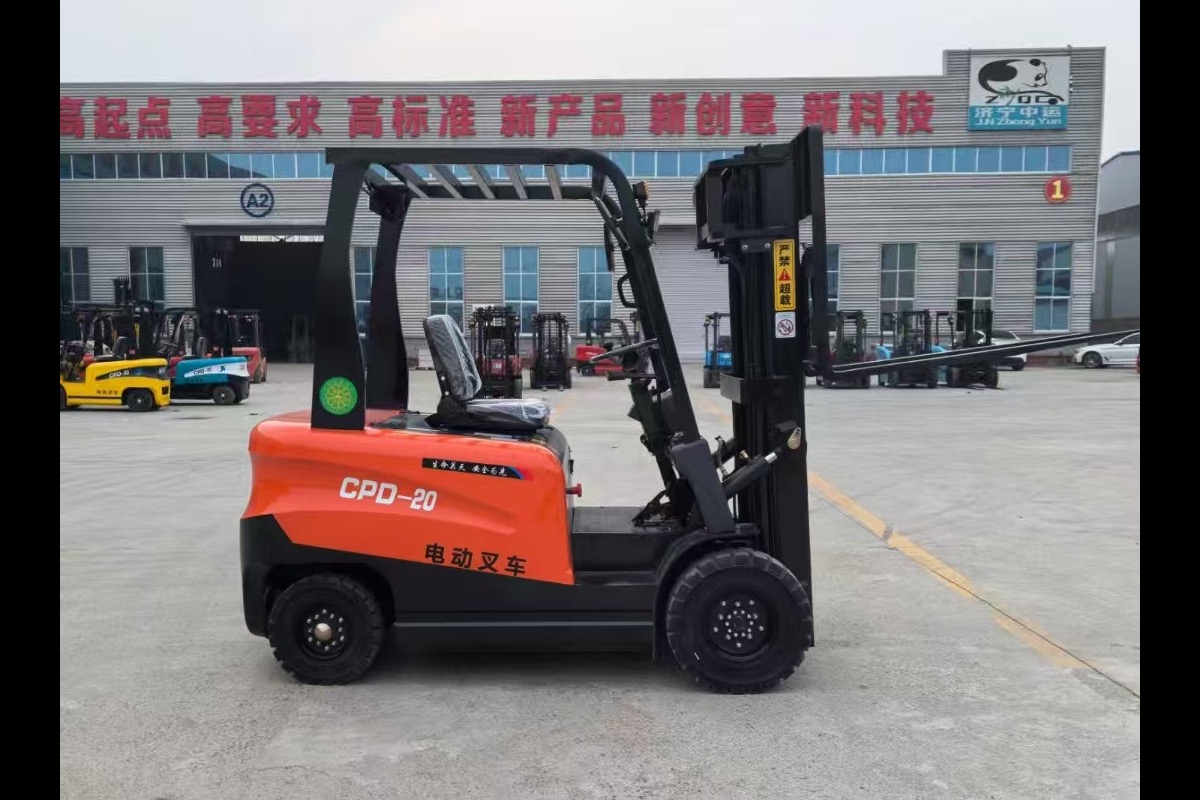
Not all electric forklift motors are the same. The difference between a brushed DC motor and a modern AC (alternating current) drive system is night and day — affecting everything from acceleration smoothness to energy efficiency and maintenance costs.
AC vs DC: Why It Matters
| Feature | Brushed DC Motor | AC Motor (PMSM) |
|---|---|---|
| Efficiency | 70-78% | 88-92% |
| Brushes to replace | Every 1,000-2,000 hours | None — brushless design |
| Regenerative braking | Limited or none | Standard — recaptures energy |
| Heat generation | High — loses 20-30% as heat | Low — runs cooler |
| Torque at low speed | Moderate | Full torque from zero RPM |
| Noise level | Louder (brush friction) | Quieter operation |
What Makes the BaGong AC Drive Different
BaGong electric forklifts use a 永磁同步交流电机 (Permanent Magnet Synchronous Motor / PMSM) paired with a Hate AC controller. This combination offers several real-world advantages:
- Smooth starts — No more jerky acceleration. The AC controller ramps power gradually, which reduces load shift and operator fatigue.
- Regen braking — When you lift the accelerator, the motor becomes a generator. In warehouse applications, this recaptures 5-10% of energy that would otherwise be lost as heat.
- No brush maintenance — Brushed motors need brush replacement every 1-2 years. The PMSM design eliminates this entirely — one less thing on your maintenance checklist.
- Higher duty cycle — The motor runs cooler, which means it can handle longer operating periods without thermal shutdown.
Controller Technology: The Brain Behind the Motor
The Hate AC controller uses field-oriented control (FOC) to manage the motor. FOC allows precise torque control at any speed — unlike DC controllers that simply vary voltage. The result is a forklift that responds predictably whether you’re inching into a tight aisle or accelerating across an open warehouse.
The controller also handles battery management communication. When paired with a LiFePO₄ battery, the controller adjusts power delivery based on state of charge — maintaining consistent performance even as the battery drains.
Real-World Energy Savings
In a typical warehouse running two 8-hour shifts, the 15% efficiency improvement of an AC motor vs DC saves roughly 3-4 kWh per shift. Over a year (500 operating days for a two-shift operation), that’s 3,000-4,000 kWh saved — translating to $400-600 in electricity costs annually per forklift.
FAQ
Q: Are AC motor forklifts more expensive?
A: Slightly higher upfront ($300-500), but the maintenance savings (no brushes, less heat wear) offset this within 12-18 months.
Q: Can old DC forklifts be upgraded to AC?
A: It’s possible but usually not cost-effective. The motor, controller, wiring, and pedal assembly all need replacement. A new BaGong AC forklift is typically a better investment.
Q: How long does the AC motor last?
A: PMSM motors commonly last 10,000+ hours with basic bearing maintenance — roughly the service life of the forklift itself.
All BaGong electric forklifts (2T-3.5T) feature Hate AC drive systems: 2T from $4,400 | 3T from $6,050 | 3.5T from $7,150. FOB Shanghai with lithium option available. Get a quote.