

Blog
LiFePO4 Forklift Batteries: Why They’re Becoming the Industry Standard

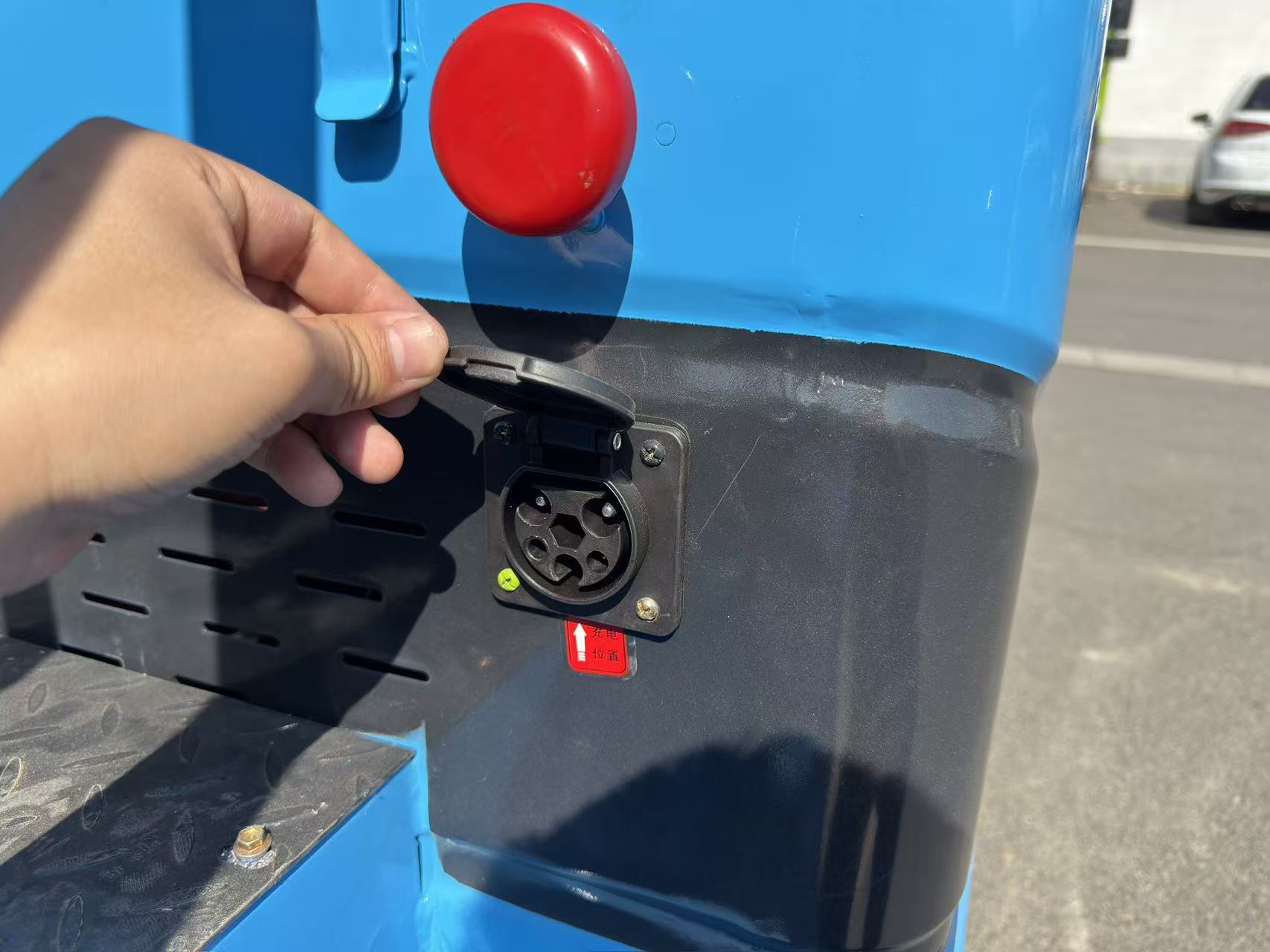
You’re still buying lead-acid batteries every 3-4 years, dealing with acid spills, watering schedules, and dedicated charging rooms with ventilation systems. Meanwhile, your competitors have switched to LiFePO4 and cut their battery-related labor by 80%. The lead-acid era is ending — and the economics make it an easy decision.
LiFePO4 vs Lead-Acid: The Numbers Don’t Lie
Let’s run the comparison on a single-shift 2-ton forklift operating 2,000 hours/year. Lead-acid: $2,200 battery, 1,500 cycles, 5-hour runtime, 8-hour charge, needs watering every 10 cycles, dedicated charging room required. Total 5-year battery cost: $4,400 (two batteries) + $1,800 watering labor = $6,200.
LiFePO4 (BaGong with Chaowei cells): $4,000 battery, 4,000+ cycles, 8-hour runtime, 2-hour charge, zero maintenance, opportunity charging anywhere. Total 5-year cost: $4,000 — no replacement needed, no labor. IEC international battery standards define rigorous testing protocols for industrial battery safety and performance. The $2,200 savings is real, and that’s before factoring in the floor space you reclaim from the charging room.
BaGong electric forklifts with Chaowei LiFePO4 cells — 2T from $6,200, 2.5T from $7,200, 3T from $8,050, 3.5T from $9,150. FOB Shanghai, CE certified, 4,000+ cycle rating. Compare LiFePO4 models.
BaGong’s LiFePO4 upgrade across the lineup: 2T $6,200 (vs $4,400 lead-acid), 2.5T $7,200 (vs $5,250), 3T $8,050 (vs $6,050), 3.5T $9,150 (vs $7,150). The $1,800-$2,000 premium buys you 8-10 years of battery life.
Safety: The Advantage Nobody Talks About
Lead-acid batteries off-gas hydrogen during charging — flammable, explosive, and requiring dedicated ventilation. They leak sulfuric acid that corrodes battery trays and creates OSHA-reportable hazards. LiFePO4 chemistry is inherently stable: no thermal runaway below 270°C (vs 150°C for NMC lithium), no off-gassing, no acid. Lithium iron phosphate (LiFePO4) battery technology is widely recognized for its thermal stability and long cycle life. You can charge them next to food processing lines without contamination concerns.
The BMS (Battery Management System) in BaGong’s LiFePO4 packs monitors every cell individually — temperature, voltage, state of charge — and will shut down the pack before any cell enters an unsafe condition. Lead-acid batteries have no equivalent protection.
FAQ
Q: Are LiFePO4 batteries recyclable?
A: Yes — and unlike lead-acid (which has a 99% recycling rate but involves toxic smelting), LiFePO4 recycling uses hydrometallurgical processes with near-zero emissions. The iron and phosphate are recovered as fertilizer-grade materials.
Q: What happens to LiFePO4 capacity after 5 years?
A: Typically 80-85% of original capacity remains after 4,000 cycles. For a single-shift operation, that’s year 8-10 before replacement is needed.
Make the battery that lasts a decade. BaGong’s LiFePO4 forklifts deliver 4,000+ cycles with zero maintenance. 2-Ton LiFePO4 $6,200 | 3-Ton LiFePO4 $8,050 | Get Battery Spec Sheet →
The cycle life advantage of LiFePO4 is really the game-changer. We switched our fleet last year and haven’t looked back — opportunity charging alone transformed our workflow.
Well-written overview of the safety angle. No thermal runaway risk is a huge factor that many procurement teams still overlook when comparing battery chemistries.
This breaks down the lead-acid vs LiFePO4 comparison really well. The cycle life numbers are what convinced our management team to start the switch. One thing I am curious about – how does the BMS handle high ambient temperatures? Here in Lagos our warehouse often hits 35°C and I want to make sure the battery management system can cope without additional cooling infrastructure.