

Blog
Electric Forklift Tires: Solid vs Pneumatic vs Cushion — Complete Comparison

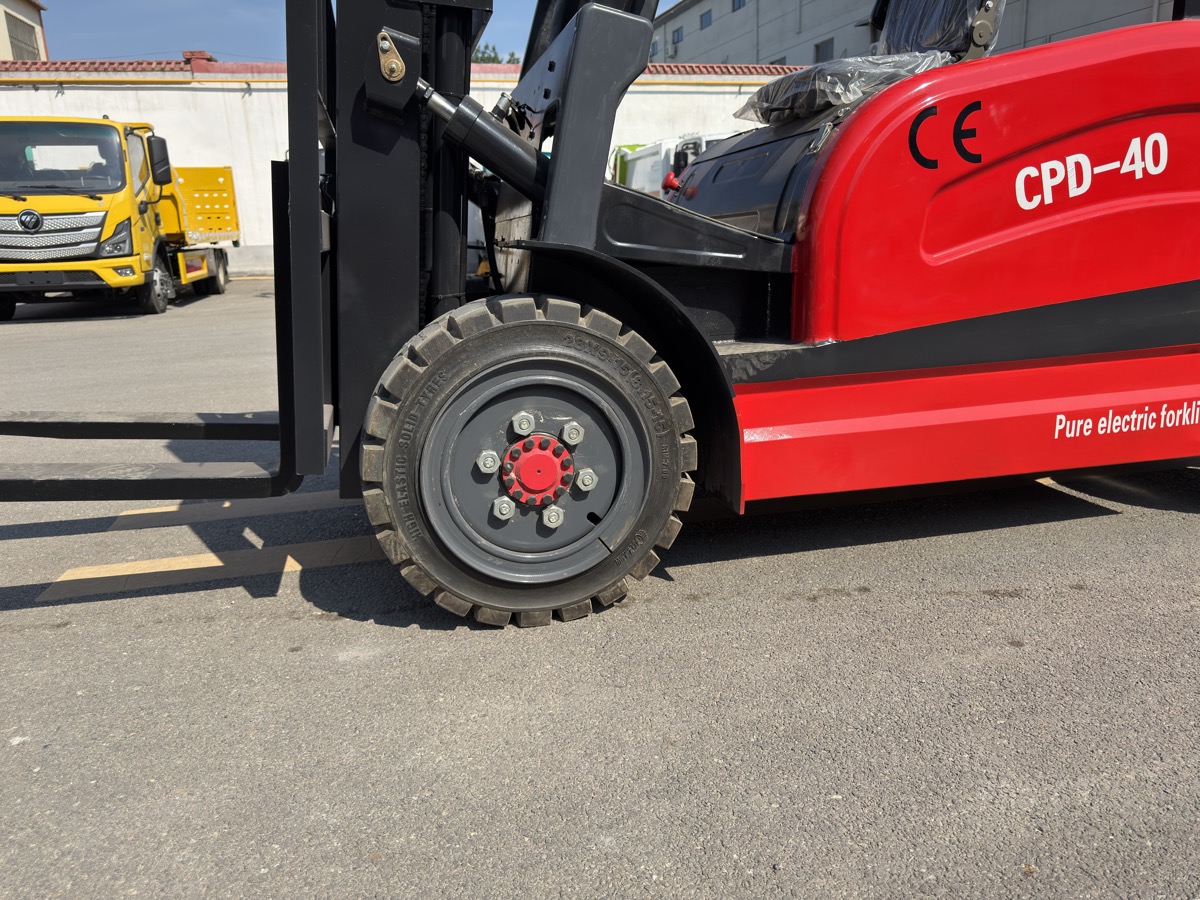
Your forklift tires are chunking after 600 hours, your operators are complaining about back pain from the vibration, and you’re replacing a set every 8 months. Choosing the wrong tire compound for your floor surface is the most expensive “minor” decision in forklift procurement — and most buyers don’t think about it until the first set wears out.
Solid vs Pneumatic vs Cushion: What Actually Works Where
Solid pneumatic tires are the workhorse choice for mixed surfaces — warehouses with dock plates, outdoor yards, and asphalt aprons. They can’t go flat (no air chamber), handle debris without punctures, and last 2,000-3,000 hours on smooth concrete. BaGong ships most electric models with solid pneumatics as standard. The trade-off: they transmit more vibration than air-filled pneumatics, which matters for operator comfort on long shifts.
Air-filled pneumatics provide the best ride quality and traction on rough terrain — gravel, dirt lots, uneven asphalt. But they’re puncture-prone and lose pressure over time. In a warehouse with metal banding scraps or broken pallet nails, expect 1-2 flats per truck per year. For indoor-only operations, the comfort benefit rarely justifies the maintenance headache.
Cushion tires (solid rubber, smaller diameter) are for smooth indoor floors only. They’re the cheapest option, offer the tightest turning radius, and last 1,500-2,000 hours. But they’re jarring on anything rougher than polished concrete, and the smaller diameter means lower ground clearance — problematic if your dock plates have any angle to them.
When to Upgrade: Tire Compounds That Save Money
Standard black rubber has a Shore A hardness of 80-85. For high-wear applications, non-marking polyurethane (Shore A 90-95) lasts 40-60% longer and doesn’t leave black streaks on light-colored floors. The upgrade costs about $120 per tire — but extends replacement intervals from 1,800 to 2,800 hours. For food-grade and pharmaceutical warehouses, white non-marking tires are mandatory.
BaGong’s 4-ton model ships with oversized solid pneumatic tires specifically chosen for heavy-load stability on uneven surfaces. The larger contact patch reduces ground pressure, which extends floor life in warehouses with epoxy coatings.
FAQ
Q: How do I know when forklift tires need replacement?
A: The wear line is molded into the tire sidewall. When the tread wears flush with this line, replace immediately. Running past the wear line risks rim damage ($400-$600 per wheel).
Q: Can I switch tire types on an existing forklift?
A: Usually yes for solid-to-pneumatic swaps of the same diameter. Switching from cushion to pneumatic requires different rims and may affect load capacity ratings — check with the manufacturer.
Get the right tires for your floor. BaGong offers solid pneumatic, air pneumatic, and non-marking options across all models. 2-Ton with Solid Tires | Request Tire Options Guide →
Great breakdown of tire types! Most suppliers in my region just ship with whatever tires they have in stock and dont explain the options. The point about solid tires reducing downtime on rough surfaces is critical — one flat pneumatic tire can cost you half a shift. Would love to see a follow-up on tire compounds for cold storage applications.